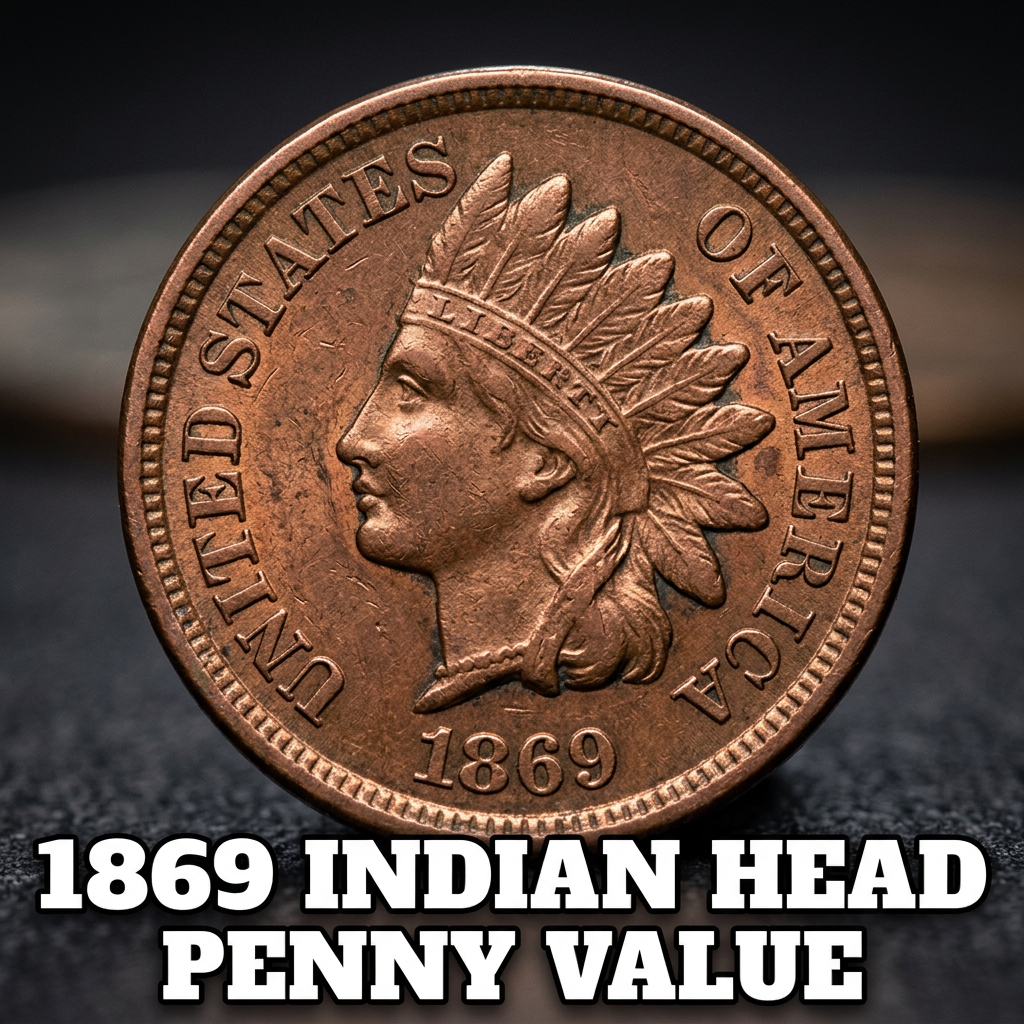
The 1869 Indian Head Penny is worth anywhere from $85 in worn condition to over $3,500 in high-grade mint state. Finding one of these bronze treasures in an old jar or a family collection is an exciting discovery because this specific year is considered a “better date” in the series.
Understanding the Scarcity of the 1869 Indian Head Cent
If you have stumbled upon an old penny with a Native American profile on the front, you might be holding a piece of Post-Civil War history. The 1869 Indian Head Penny is particularly special because it has a relatively low mintage compared to later years. Only about 6.4 million of these coins were produced at the Philadelphia Mint. While that sounds like a large number, very few have survived the last 150 years in recognizable condition.
Most of these coins circulated heavily through the American economy during the late 19th century. This means that a majority of surviving specimens are worn down, with the word “LIBERTY” on the headband barely visible. If you are unsure about the authenticity or exact variety of your find, using a best coin identifier app can help you quickly confirm what you have before taking it to a professional dealer. Identifying the 1869 date clearly is the first step toward determining if you have a common filler or a valuable rarity.
For those who are serious about tracking their collection, the CoinHix app is a fantastic tool to catalog your finds and monitor market trends. Using modern technology makes it much easier for everyday Americans to sift through pocket change and attic finds to spot the gems that are actually worth hundreds or even thousands of dollars.
How Grading Impacts the 1869 Penny Value
In the world of coin collecting, “condition is everything.” The value of your 1869 Indian Head Penny depends heavily on its grade. Professional graders look at the amount of wear on the feathers of the headdress and the sharpness of the lines in the shield on the back. A coin in “Good” condition will show the main design but look flat, while an “Uncirculated” coin will look like it just stepped out of the mint.
For a detailed look at the highest tiers of preservation, you can check the 1869 Indian Head Penny MS65 value, which represents coins that have retained their original red luster. Most people, however, will find “Fine” or “Very Fine” examples. In these grades, the letters in “LIBERTY” are partially or fully visible, which significantly boosts the price over heavily worn versions.
If you are trying to estimate the worth of your collection at home, comparing your coin to online databases or using the CoinHix app can provide a baseline. It is important to remember that even a small scratch or a “cleaning” (which collectors hate) can drop the value by 50% or more. Always handle your old pennies by the edges to preserve their surface.
1869 Indian Head Penny Price Chart
To help you understand what your coin might be worth at a coin show or an online auction, we have compiled a price guide based on recent market data. Please note that these prices are estimates for brown (BN) or red-brown (RB) coins, which are the most common colors for 1869 pennies.
| Condition / Grade | Estimated Market Value |
|---|---|
| Good (G-4) | $85 – $100 |
| Very Good (VG-8) | $125 – $150 |
| Fine (F-12) | $190 – $230 |
| Very Fine (VF-20) | $275 – $320 |
| Extremely Fine (EF-40) | $450 – $550 |
| About Uncirculated (AU-50) | $700 – $850 |
| Mint State (MS-63) | $1,200+ |
The Rare 1869/9 Overdate Variety
For the eagle-eyed collector, there is a very famous “variety” of the 1869 penny that is worth even more than the standard version. Known as the “1869 over 69” or the “9 over 9,” this error occurred when the date was punched twice into the die. If you look closely at the “69” digits with a magnifying glass, you might see traces of another “69” underneath, shifting slightly.
This variety is highly sought after by specialists and can command a 50% to 100% premium over the standard Indian Head Cent market prices seen in other years. Because these errors are rare, they are often authenticated by professional grading services like PCGS or NGC. If you think you see double digits, it is definitely worth getting a professional opinion.
Whether you have a standard 1869 or a rare overdate, the market for Indian Head Pennies remains strong among American collectors. Tools like CoinHix can help you stay updated on whether these prices are rising or falling. Even in low grades, the 1869 is a “key date” light, meaning it is one of the harder coins to find when trying to complete a full set of pennies from 1859 to 1909.
Frequently Asked Questions
Q: How can I tell if my 1869 Indian Head Penny is real?
A: Genuine 1869 pennies are made of 95% copper and 5% tin/zinc. They should weigh approximately 3.11 grams and have a diameter of 19mm. If the coin is magnetic or feels too light, it may be a modern reproduction.
Q: Should I clean my 1869 penny to make it look better?
A: No! You should never clean old coins. Brushing or using chemicals removes the original surface and “patina,” which collectors value. A cleaned coin will almost always sell for much less than one with natural aging and dirt.
Q: Where is the mint mark on an 1869 Indian Head Penny?
A: There are no mint marks on the 1869 penny. During this era, all Indian Head Pennies were struck at the Philadelphia Mint. Mint marks (like the “S” for San Francisco) did not appear on this series until 1908.