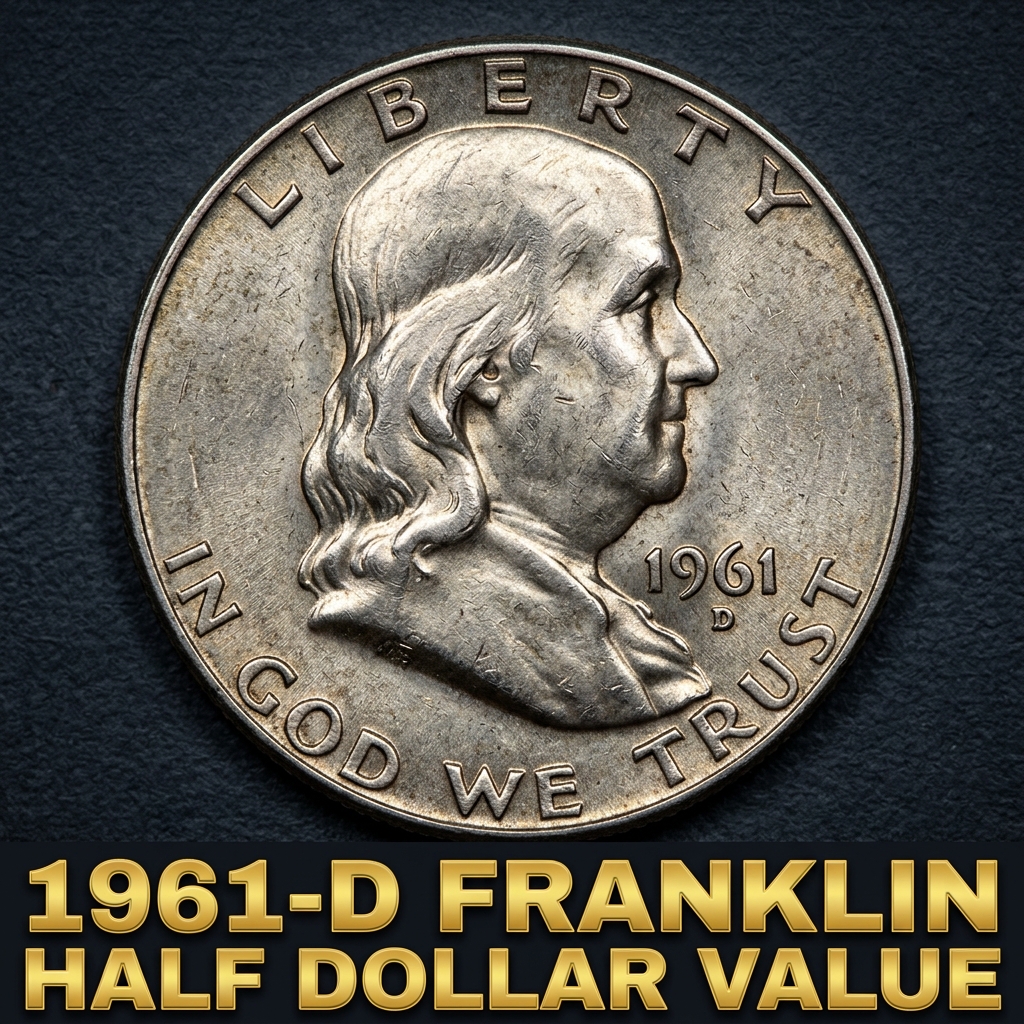
The 1961-D Franklin Half Dollar is worth anywhere from $12 in worn condition to over $1,500 in high-grade mint state. Whether you found one in a drawer or inherited a collection, these silver coins are highly prized by everyday Americans for both their precious metal content and historical legacy.
Understanding the Silver Content and Market Demand
If you have stumbled upon a 1961-D Franklin Half Dollar, the first thing you should know is that it is made of 90% silver and 10% copper. Because of its high silver content, every single one of these coins has an inherent “melt value” that fluctuates with the market price of silver. Even if the coin is scratched, worn, or dull, it will always be worth significantly more than its fifty-cent face value. For many people, identifying these treasures is the first step toward building a collection. If you are unsure exactly what you have, using the best coin identifier app can help you confirm the date and mint mark in seconds.
The “D” on the back of your coin, located just above the Liberty Bell, stands for the Denver Mint. In 1961, the Denver Mint produced over 20 million of these half dollars. While this makes them relatively common compared to some rare dates, finding one in pristine, uncirculated condition is a different story. Serious collectors are often looking for coins that have avoided the wear and tear of daily commerce. To get a better sense of how your coin stacks up against professional standards, you can download the CoinHix app to compare your finds with high-resolution images of certified specimens.
How to Determine the Condition and Grade
When it comes to the value of a 1961-D half dollar, condition is everything. Professional coin graders use a scale from 1 to 70. Most coins found in change are “Circulated,” meaning they have visible wear on Benjamin Franklin’s cheek or the lines of the Liberty Bell. If your coin looks brand new and shiny, it might be in “Mint State” (MS). These are the coins that fetch the highest premiums at auctions.
Collectors pay special attention to the “Full Bell Lines” (FBL) on the reverse. If the horizontal lines at the bottom of the Liberty Bell are crisp and complete without any interruptions, the value can skyrocket. For those curious about the current market, checking the 1961-D Franklin Half Dollar MS price data can provide insight into what top-tier coins are currently selling for. If your coin lacks these sharp details, it is still a valuable piece of silver history, but it likely falls into the bullion category rather than the high-end investment category.
| Condition Grade | Estimated Value Range |
|---|---|
| Good / Fine (Circulated) | $11.00 – $14.00 |
| Extremely Fine (AU) | $15.00 – $18.00 |
| Uncirculated (MS63) | $25.00 – $40.00 |
| Choice Uncirculated (MS65) | $50.00 – $120.00 |
| Gem Uncirculated (MS66+ FBL) | $500.00+ |
Rarity and Potential Mint Errors
While the 1961-D is generally considered a common date, mint errors can significantly increase the worth of your coin. Some 1961-D half dollars exhibit “doubled dies,” where the lettering or the image appears to have a ghost-like second image shifted slightly. These are rare and highly sought after by specialists. Keeping a close eye on the guide to 1961 Franklin Half Dollar values will help you stay updated on which specific error types are currently trending in the hobby.
Most everyday users won’t find a rare error, but it is always worth checking with a magnifying glass. If you think you’ve spotted something unusual, the CoinHix app provides a platform where you can learn about common minting mistakes and how they impact the bottom line. Even without an error, the 1961-D remains a staple of American coinage, representing the final years before the series was replaced by the Kennedy Half Dollar following the tragedy in 1963.
Tips for Selling and Preserving Your Silver Coins
If you decide to sell your 1961-D Franklin Half Dollar, avoid cleaning it at all costs. To a novice, a shiny coin looks better, but to a professional collector, cleaning a coin ruins its “numismatic” value and can cut its price in half. Natural patina and toning—the colors a coin turns as it ages—are actually preferred by many buyers. You should store your coins in PVC-free flips or capsules to prevent further scratches or environmental damage.
When you’re ready to see what your collection is worth, use CoinHix to track your inventory and get real-time silver price updates. Whether you choose to sell to a local coin shop, through an online auction, or keep it as a family heirloom, knowing the true value of your silver protects you from being underpaid. The 1961-D Franklin is a beautiful piece of mid-century Americana that continues to be a favorite for everyone from casual enthusiasts to serious investors.
Frequently Asked Questions about the 1961-D Half Dollar
Q: Where is the mint mark on a 1961-D Franklin Half Dollar?
A: You can find the “D” mint mark on the reverse (back) side of the coin. It is located just above the wooden yoke of the Liberty Bell, near the center top of the coin.
Q: Is a 1961-D half dollar 100% silver?
A: No, it is 90% silver and 10% copper. This was the standard composition for American half dollars, quarters, and dimes until 1964.
Q: How can I tell if my 1961-D Franklin is uncirculated?
A: An uncirculated coin will have its original “mint luster,” which is a frosty or satiny sheen. If the highest points of the coin, like Franklin’s hair or the Liberty Bell’s surface, look smooth or shiny rather than frosty, the coin has likely been in circulation.