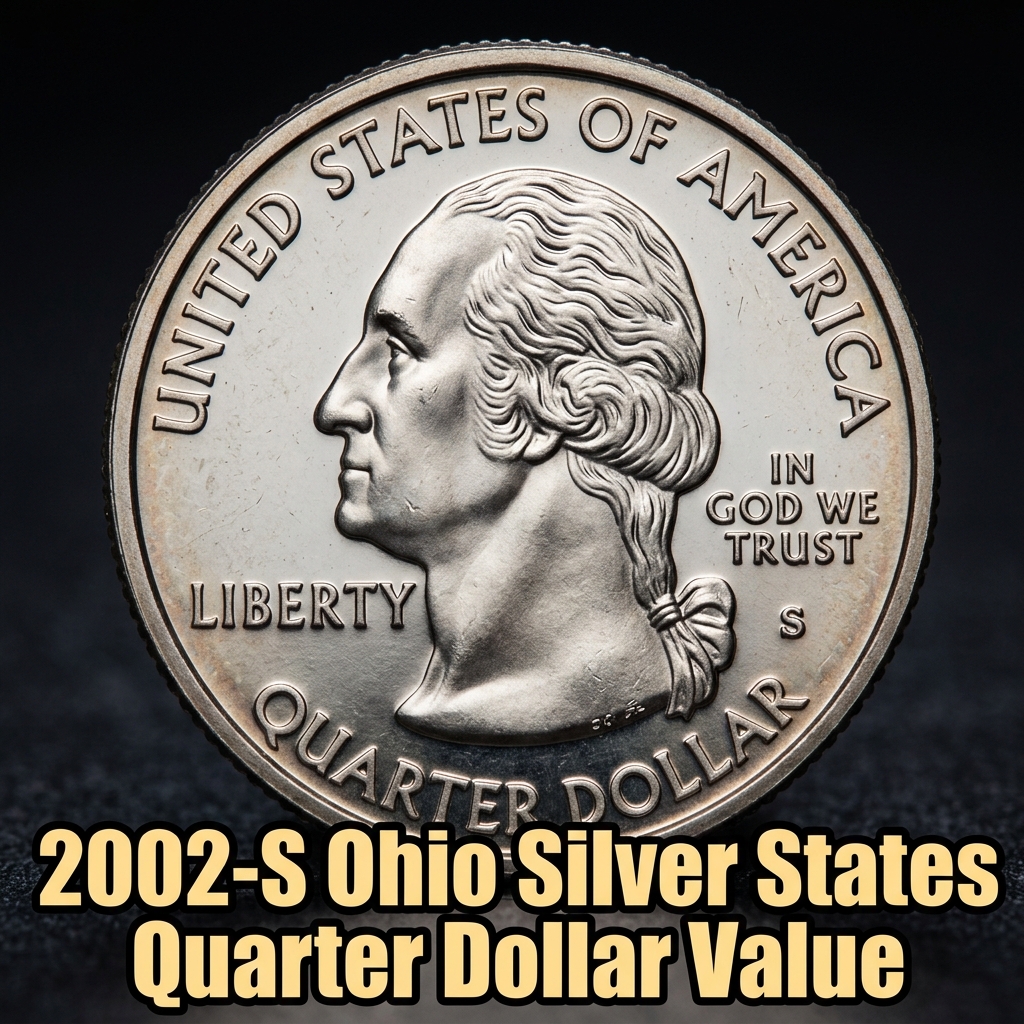
The 2002-S Ohio Silver State Quarter is worth anywhere from $6 in typical proof condition to over $50 in perfect high-grade specimens. If you have found a shiny quarter featuring a plane and an astronaut, you might be holding a piece of 90% silver history that is worth significantly more than its twenty-five-cent face value.
Before you run to the bank to spend your change, it is vital to know exactly what you have. Most of the Ohio quarters you see in your pocket change were struck in copper-nickel and are only worth face value. However, the “S” mint mark version from the San Francisco Mint comes in a special silver composition intended for collectors. To get a real-time appraisal of your collection, you can use the best coin identifier app to distinguish between common clad strikes and valuable silver proofs. Many enthusiasts also rely on the CoinHix app to track daily market fluctuations for these specific modern issues.
Identifying the 2002-S Ohio Silver Proof Quarter
The first thing to look for is the mint mark located on the obverse (heads side) to the right of George Washington’s ponytail. A small “S” indicates it was minted in San Francisco. However, not all “S” quarters are silver. The San Francisco Mint produced both copper-nickel “Clad” proofs and “Silver” proofs in 2002.
To tell the difference without fancy equipment, look at the edge of the coin. A silver quarter will have a solid, bright silver edge with no trace of a copper-colored stripe. Additionally, the silver version weighs 6.25 grams, while the standard clad version weighs only 5.67 grams. If your coin looks exceptionally mirror-like and has that telltale silver edge, you have a 2002-S Silver Ohio Quarter. Understanding these physical traits is the first step in determining the accurate 2002 state quarter auction prices and market worth.
Market Value and Price Guide for Ohio Silver Quarters
The value of the 2002-S Ohio Silver State Quarter is primarily tied to two factors: the spot price of silver and the numerical grade assigned by professional services like PCGS or NGC. Because these were sold in protective sets, most surviving examples are in “Proof” (PR) condition. A standard PR-65 to PR-67 specimen usually sells for a premium over its silver melt value.
If your coin is graded as a “Deep Cameo” (DCAM), meaning the frosted design stands out sharply against a mirror-like background, the value increases. Perfect PR-70 Deep Cameo specimens are the “holy grail” for State Quarter collectors and can fetch much higher prices at enthusiast auctions. For those who want to compare multiple years, checking a comprehensive 2002 silver quarter value guide can provide a broader perspective on how the Ohio design performs against other states released that same year, like Tennessee or Louisiana.
| Condition Grade | Estimated Value (USD) |
|---|---|
| PR-65 Deep Cameo | $6.50 – $9.00 |
| PR-68 Deep Cameo | $12.00 – $18.00 |
| PR-69 Deep Cameo | $22.00 – $35.00 |
| PR-70 Deep Cameo (Perfect) | $50.00 – $125.00+ |
The Symbolism of the Ohio State Quarter Design
The 2002 Ohio quarter is one of the most beloved designs in the 50 State Quarters Program. Titled “Birthplace of Aviation Pioneers,” it honors Ohio’s contribution to flight. The reverse features the 1903 Wright Flyer and an astronaut, representing both the Wright Brothers and John Glenn or Neil Armstrong, who were all born in Ohio.
Collectors often seek out the silver version because the 90% silver composition enhances the fine details of the airplane’s wings and the astronaut’s suit. When these coins are kept in their original US Mint packaging, they retain their luster and value much better than those handled with bare hands. If you are unsure if your coin has tiny scratches that might lower its grade, the CoinHix app offers high-resolution comparison tools to help you judge the surface quality before sending it off for professional grading.
Why Silver State Quarters Are a Great Investment
While millions of quarters were minted for circulation in 2002, the silver proof versions were produced in much smaller quantities—specifically about 888,526 sets were made. This relative scarcity, combined with the intrinsic value of the silver metal, creates a “price floor” for these coins. Even if the collector demand for the Ohio design were to drop, the coin would still be worth its weight in silver.
For everyday Americans, these coins represent an affordable way to start a precious metals collection. Unlike the common zinc and copper coins, silver quarters feel heavier and have a high-pitched “ring” when gently tapped. By using CoinHix, you can keep an organized digital inventory of your silver finds and stay updated on when the market price spikes. Whether you found it in an old desk drawer or inherited a collection, the 2002-S Ohio Silver Quarter remains a shining example of American numismatic history.
Q: How can I tell if my 2002-S Ohio Quarter is silver or clad?
A: Check the edge of the coin. If the edge is solid silver/white with no copper stripe, it is likely the 90% silver version. You can also weigh it; the silver version is 6.25 grams, while the clad version is 5.67 grams.
Q: Is a regular 2002 Ohio quarter from circulation worth more than 25 cents?
A: Generally, no. Quarters with a “P” (Philadelphia) or “D” (Denver) mint mark found in pocket change are usually only worth face value unless they have a significant minting error.
Q: Where is the best place to sell my 2002-S Silver Ohio Quarter?
A: For common grades, local coin shops or online marketplaces like eBay are best. For highly graded PR-70 specimens, professional auction houses or specialized coin dealers will help you get the maximum value.