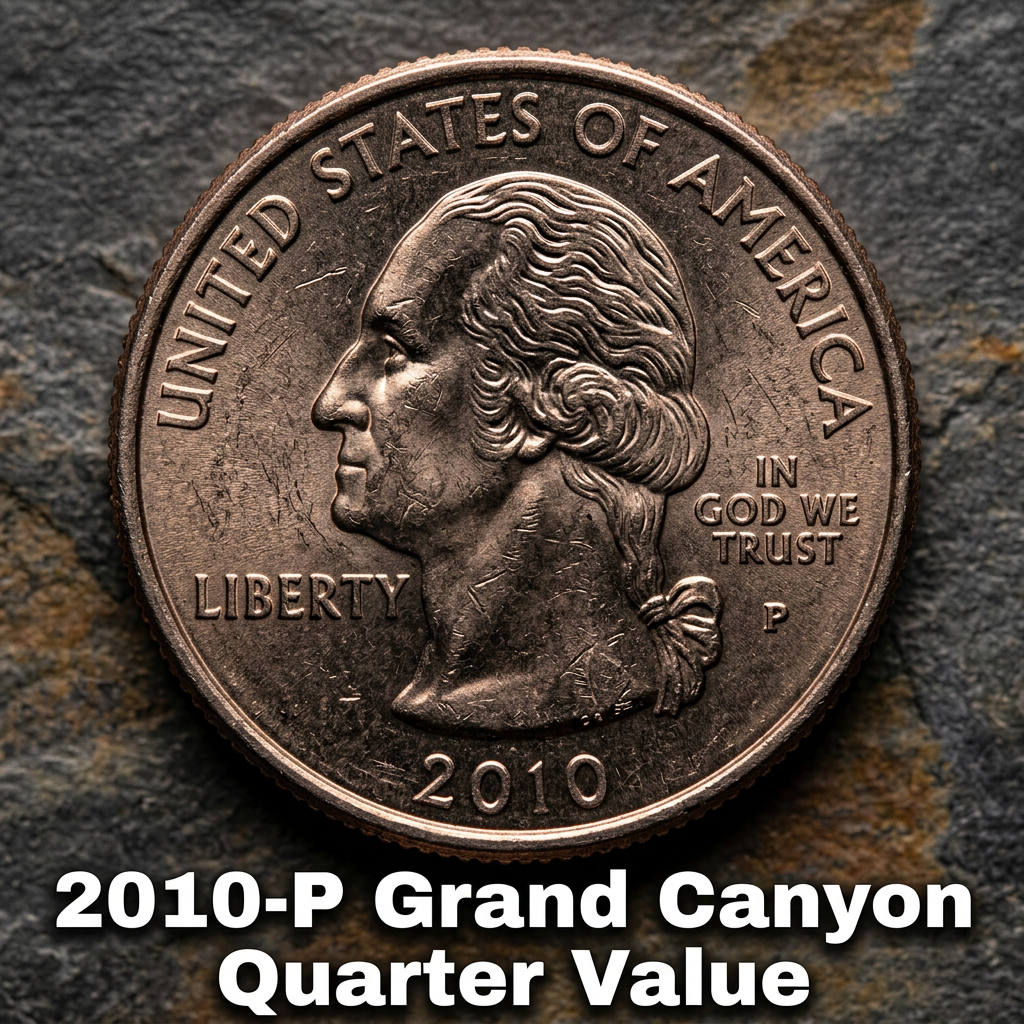
The 2007-S Idaho States Quarter Dollar is worth anywhere from $0.25 for a circulated piece to over $50 for a high-grade silver proof. Whether you found one in a jar or inherited a collection, understanding the difference between clad and silver proofs is key to finding its true market value.
| Coin Type / Grade | Approximate Market Value |
|---|---|
| 2007-S Idaho Clad Proof (PR65-PR69) | $1.00 – $5.00 |
| 2007-S Idaho Clad Proof (PR70 DCAM) | $15.00 – $30.00 |
| 2007-S Idaho Silver Proof (PR65-PR69) | $8.00 – $15.00 |
| 2007-S Idaho Silver Proof (PR70 DCAM) | $40.00 – $65.00 |
Identifying Your 2007-S Idaho State Quarter
The 2007 Idaho State Quarter was the 43rd coin released in the U.S. Mint’s famous 50 State Quarters Program. Before you think you’ve struck gold, it is important to realize that “S” mint mark coins were specifically made for collectors at the San Francisco Mint. Unlike the millions of quarters minted in Philadelphia (P) or Denver (D) for everyday spending, these were sold in special sets. If you have one in your pocket, it likely came from a broken set and was spent by someone unaware of its origin.
To determine if yours is worth more than face value, the first step is checking the “S” mark to the right of George Washington’s ponytail. Then, you must distinguish between the “Clad” version (copper-nickel) and the “Silver” version (90% silver). Using the best coin identifier app can help you distinguish these two types instantly. The edge of the coin is the biggest giveaway: a silver proof will have a solid silver-colored edge, while a clad proof will show a distinct copper stripe.
Many hobbyists use CoinHix to keep a digital inventory of their State Quarters. This makes it easier to track which mintages you are missing and which ones have the highest potential for appreciation over time.
Clad vs. Silver: Why the 2007-S Idaho Quarter Value Varies
Value is largely driven by the metal content and the rarity of the specific finish. The San Francisco Mint produced two distinct types of proofs in 2007. The Clad Proof was minted in 2,577,124 copies, which sounds like a lot, but is a tiny fraction compared to the billions of circulating quarters. Because these are “proof” coins, they feature a mirror-like background and “frosted” details on the Peregrine Falcon and the map of Idaho.
The 90% Silver Proof is much more desirable. With a mintage of only 1,313,481, it is roughly twice as rare as the clad version. Furthermore, its value is tied to the current “spot price” of silver. Even if the coin is scratched or damaged, it will always be worth its weight in silver, whereas a damaged clad coin might only be worth 25 cents. You can check the 2007 quarter value for various conditions to see how the silver content impacts the final price.
For those unsure about their coin’s metal composition, CoinHix provides detailed guides and high-resolution images. Comparing your coin to these professional photos is the best way to ensure you aren’t underpricing a valuable silver proof when selling to a local dealer.
| Feature | Clad Proof (2007-S) | Silver Proof (2007-S) |
|---|---|---|
| Composition | Cupro-Nickel Clad Copper | 90% Silver, 10% Copper |
| Weight | 5.67 grams | 6.25 grams |
| Edge Appearance | Visible Copper Stripe | Shiny Silver Stripe |
Grading and Condition: The Quest for PR70
In the world of coin collecting, condition is everything. A professional grader (like PCGS or NGC) uses a scale from 1 to 70. Proof coins like the 2007-S Idaho Quarter are expected to be in perfect or near-perfect condition. A grade of PR69 (Proof 69) means the coin is nearly perfect to the naked eye but might have a tiny microscopic blemish. These are common and generally sell for modest prices.
However, a “Perfect 70” (PR70) grade is the holy grail for modern collectors. These coins have no visible flaws even under 5x magnification. The difference in price can be staggering; a PR69 silver Idaho quarter might sell for $12, while a PR70 Deep Cameo (DCAM) version can fetch over $60. Because so many proofs are preserved in plastic cases, even the smallest fingerprint or hairline scratch can drop the value significantly.
When analyzing the Idaho and Montana 2007 quarter price trends, we see that pristine Deep Cameo surfaces are what collectors are willing to pay a premium for. If your coin has a hazy look or scratches on the fields, it will likely sell at the lower end of the value spectrum.
Design History of the Idaho State Quarter
The reverse of the Idaho quarter features a striking Peregrine Falcon and the state outline, symbolizing the wild and majestic spirit of the “Gem State.” The Peregrine Falcon was once an endangered species but has made a significant recovery in Idaho. The design also includes the state motto “Esto Perpetua” (Let it be perpetual). This design was selected by Governor Dirk Kempthorne after a statewide competition.
The design was sculpted by Donna Weaver and remains one of the more popular entries in the series due to the intricate detail on the falcon’s feathers. For collectors, the 2007 year is particularly interesting because it marked the beginning of the end of the 50 State Quarters program, which concluded in 2008.
If you are using CoinHix to build a complete set, you’ll find that the 2007-S proofs are essential for a “Registry Set,” which is a collection of the highest possible graded coins. Even though the Idaho quarter isn’t the rarest in the series, its biological and geographical themes make it a favorite for thematic collectors.
| Mintage Stats | Total Amount |
|---|---|
| 2007-P (Philadelphia) | 294,600,000 |
| 2007-D (Denver) | 286,800,000 |
| 2007-S (San Francisco Clad) | 2,577,124 |
| 2007-S (San Francisco Silver) | 1,313,481 |
Are There Any Errors on 2007-S Quarters?
While error hunters are usually busy looking at “P” or “D” mint quarters for doubled dies or chips, proof coins are not immune to mistakes. However, because proof coins are struck twice with specially polished dies and manually inspected, errors are extremely rare. This makes any confirmed error on a 2007-S Idaho quarter potentially worth hundreds or even thousands of dollars.
Potential errors to look for include “Struck Through” errors, where a piece of dust or grease gets caught between the die and the coin blank, leaving a blurry impression. Another rarity is a “Proof Mules” or clipped planchets, though these are almost never seen in modern government-issued proof sets. If you think you’ve found a weird-looking Idaho quarter, it’s best to get it authenticated by a professional.
Always remember that “post-mint damage” (getting scratched in a parking lot) is not an error. If your quarter looks like it’s been through a washing machine, it is unfortunately just a damaged coin worth 25 cents. Tools like CoinHix can help you identify common fake “errors” that are actually just damage, saving you the cost of expensive grading fees.
How to Sell or Buy an Idaho State Quarter
If you want to sell your 2007-S Idaho state quarter, the first step is protection. Do not clean the coin! Cleaning a coin creates micro-scratches that destroy its numismatic value. Keep it in its original plastic lens if it came in a set, or place it in a cardboard 2×2 coin flip.
For selling, eBay is the most liquid marketplace for individual state quarters. You can see what people are actually paying by filtering for “Sold Listings.” Local coin shops are a good option if you have a large collection, but keep in mind that they need to make a profit, so they may offer you 50-70% of the retail value. For high-value silver proofs in PR70 condition, auction houses like Heritage Auctions or GreatCollections are the preferred choice.
Lastly, make sure you know exactly what you have before you walk into a shop. Use online price guides and mobile apps to arm yourself with knowledge. Knowing the difference between the $1 clad version and the $50 silver PR70 version ensures you get a fair deal every time.
| Where to Sell | Pros | Cons |
|---|---|---|
| eBay | High visibility, competitive prices | Fees and shipping hassle |
| Local Coin Shop | Instant cash, professional advice | Lower payout than retail |
| Coin Shows | Multiple buyers in one place | Requires travel and time |
FAQ
Q: Why does my 2007-S Idaho quarter look shiny like a mirror?
A: That is because it is a “Proof” coin. These were specially struck by the mint for collectors using polished dies and planchets. They were never meant to be used in change, but sometimes people spend them by accident.
Q: Is every 2007-S quarter made of silver?
A: No. The U.S. Mint produced both clad (copper-nickel) and silver proof sets in 2007. To tell them apart, look at the edge of the coin. If you see a orange/copper stripe, it is clad. If it is solid silver-white, it is 90% silver.
Q: How much silver is in the silver version?
A: The 2007-S Silver Idaho Quarter contains 0.1808 troy ounces of pure silver. Its value will always be at least equal to the weight of that silver, regardless of the coin’s condition.
Q: Does the “S” mean it is rare?
A: It is rarer than the Philadelphia and Denver versions, but because millions of “S” proofs were minted and preserved in sets, they are not considered “rare” in the world of numismatics unless they are in perfect PR70 condition.
Q: Should I get my 2007-S Idaho quarter graded?
A: Only if you believe it is a perfect PR70. Grading can cost $20-$40 per coin. If your coin is only worth $10, you would lose money by having it graded. Use an app like CoinHix to compare your coin to other graded examples before spending the money on professional services.