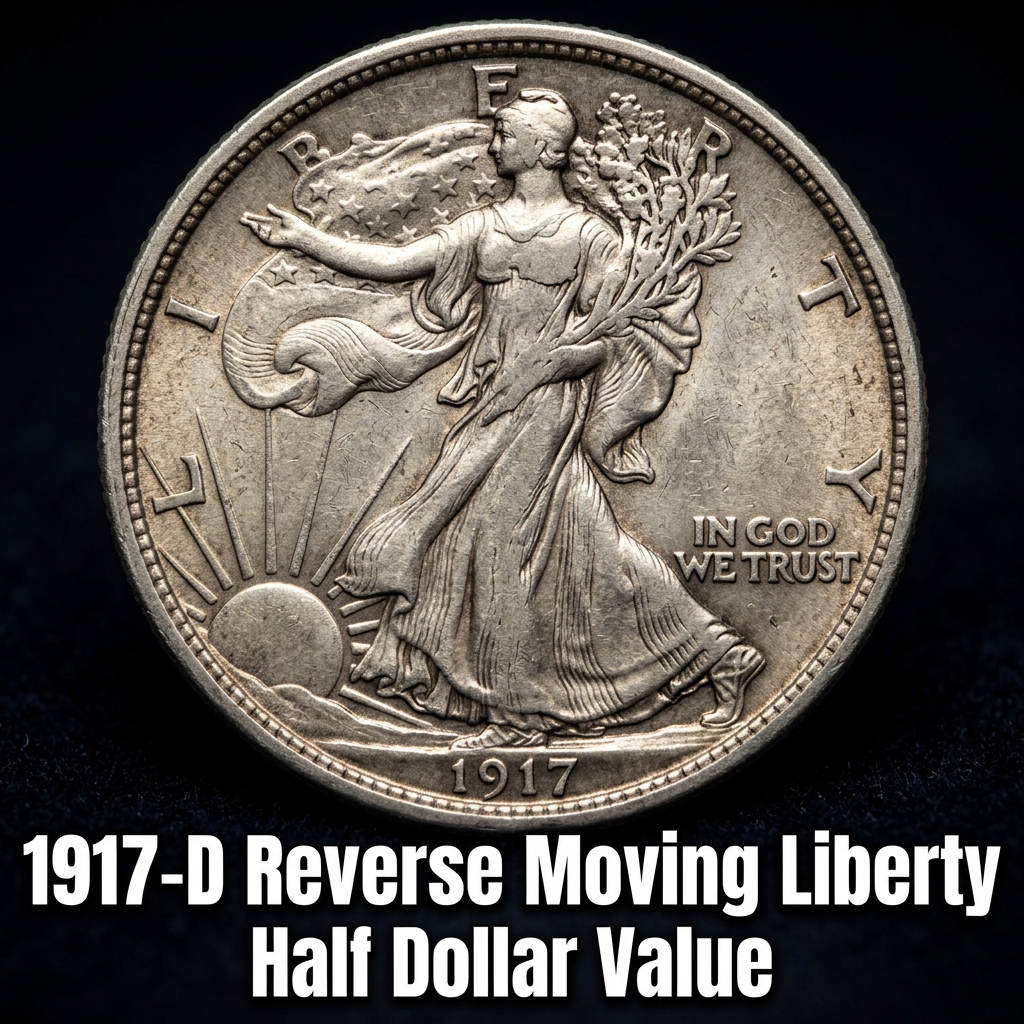
The 1920 Standing Liberty Quarter is worth anywhere from $15 in worn condition to over $350 in choice mint state. This beautiful silver coin is a favorite among everyday treasure hunters who stumble upon old collections or find forgotten relics in jars of change inherited from family members.
| Condition | Estimated Value (No Mint Mark) |
|---|---|
| Good (G-4) | $15 – $20 |
| Very Fine (VF-20) | $35 – $50 |
| About Uncirculated (AU-50) | $90 – $120 |
| Mint State (MS-63) | $200 – $350+ |
Understanding the 1920 Standing Liberty Quarter Design
The 1920 Standing Liberty Quarter is widely considered one of the most artistic coins ever produced by the United States Mint. Designed by Hermon Atkins MacNeil, it features Lady Liberty stepping through a gate, holding a shield and an olive branch. This symbolized America’s stance at the end of World War I—defensive yet seeking peace. If you are unsure if you have a genuine specimen, using the best coin identifier app can help you confirm the design details and year instantly.
When you look at your 1920 quarter with no mint mark, you are looking at a coin struck in Philadelphia. During this era, the Philadelphia Mint did not use a “P” mark. These “Type 2” versions of the quarter are especially popular because they addressed earlier design concerns. If the coin looks exceptionally crisp, you might want to use CoinHix to zoom in on the finer details, such as the rivets on the shield or the feathers on the eagle’s wings.
The composition of these coins is 90% silver and 10% copper. This means that even if the coin is heavily worn and has no collector value, it still holds “melt value” based on the current price of silver. However, because 1920 was a high-production year, many of these survived in decent shape, making them an accessible entry point for new collectors.
How to Identify a 1920 Quarter with No Mint Mark
Identifying a Philadelphia-minted 1920 Standing Liberty Quarter is straightforward. You simply need to look at the “obverse” (the front side) of the coin. Specifically, check the area to the left of the date. If you see no letter there, it was minted in Philadelphia. If there were an “S” or a “D,” it would represent the San Francisco or Denver mints, respectively.
The condition of the date is the most critical factor for 1920 quarters. In the early years of this series, the date was raised rather than recessed. This caused the numbers to wear away quickly in circulation. A 1920 quarter where the date is clearly legible is worth significantly more than one where the date is “flat” or missing entirely. Most everyday Americans happen upon “slick” versions where the date is barely visible.
By checking the detailed 1920 quarter value information, you can see how much of a premium a clear date adds to the price. If the date is completely worn off, the coin is generally only worth its silver weight. Always use a magnifying glass or a high-quality scanner to check for faint outlines of the “1920” numbers.
Grading and 1920 Standing Liberty Quarter Valuation
To accurately determine the 1920 Standing Liberty Quarter Value No Mint Mark, you must understand the grading scale. This scale runs from 1 to 70. For a coin that has been sitting in a drawer for decades, it is likely in the “Good” to “Very Fine” range. Professional collectors look for specific wear patterns on Liberty’s knees and the eagle’s breast.
| Grade | Visual Description | Est. Market Price |
|---|---|---|
| G-4 (Good) | Rims are worn, date is weak but readable. | $15 – $18 |
| F-12 (Fine) | Liberty’s drapery shows more detail. | $25 – $30 |
| VF-20 (Very Fine) | The leaf on the shield is clear. | $40 – $55 |
| MS-60 (Uncirculated) | No wear, original mint luster present. | $180 – $220 |
If you think your coin is in exceptional condition, it might be worth the cost of professional grading by the PCGS or NGC. A “Mint State” 1920 quarter looks almost like it just came out of the machine yesterday. For those wanting a quick estimate before sending it off, CoinHix offers a convenient way to compare your coin against high-resolution images of graded specimens.
The “Full Head” (FH) Designation Premium
When researching the 1920 Standing Liberty Quarter Value No Mint Mark, you will often see a price jump for coins labeled “FH.” This stands for “Full Head.” On the Standing Liberty series, the head of Lady Liberty was often weakly struck. Collectors pay a massive premium for coins that show full detail in Liberty’s hair and the ear hole.
An MS-65 coin with a Full Head is significantly rarer than an MS-65 without that detail. For the 1920 No Mint Mark issue, the strike was generally better than in previous years, but finding a truly crisp head is still a challenge. If you are comparing high-grade 1920 quarter price data, you will notice that the “FH” designation can double or even triple the value of the coin in the higher grades.
For the average person, it is important not to confuse a “clean” looking coin with a “Full Head” coin. The distinction requires very specific wear-free details. If you suspect your 1920 quarter is uncirculated and has a very sharp strike, it is best to consult a professional or use CoinHix to identify the specific traits that qualify for the FH designation.
Mintage Figures and Rarity Analysis
The 1920 Philadelphia strike had a mintage of roughly 27,860,000 coins. In the world of numismatics, this is a relatively high number, which is why the 1920 quarter is much more affordable than the rare 1916 or 1921 issues. However, the survival rate of these coins in “New” condition is quite low. Most were spent during the Great Depression and underwent decades of heavy circulation.
| Mint Location | Mintage Quantity | Relative Rarity |
|---|---|---|
| Philadelphia (No Mark) | 27.8 Million | Common (Circulated) |
| Denver (D) | 4.1 Million | Scarce |
| San Francisco (S) | 6.3 Million | Uncommon |
Since the 1920 “No Mint Mark” quarter is the most common of that year, it is the perfect coin for someone starting a collection. It provides the beauty of the Standing Liberty series without the price tag of a rare key date. While it may not make you a millionaire, finding one in an old coffee tin is still a $20 to $50 win for most people.
Tips for Selling Your 1920 Standing Liberty Quarter
If you decide you want to sell your 1920 quarter, the most important rule is: Never clean your coin. Even if it looks dirty, tarnished, or black. Collectors value the “patina”—the natural oxidation that occurs over 100 years. Scrubbing a silver coin with polish or baking soda leaves micro-scratches that will destroy its numismatic value, often reducing it to just the value of its silver weight.
When selling, it’s best to visit a local reputable coin dealer or use an online platform specialized in coins. Taking clear, high-resolution photos of both sides is essential. A 1920 Standing Liberty Quarter Value No Mint Mark is determined primarily by eye appeal and the legibility of the date. If you can show a potential buyer that the “1920” is sharp and clear, you will have a much easier time getting a fair price.
Finally, stay informed about the silver market. Since these coins are 90% silver, their “floor” price moves with the daily silver spot price. Even if your coin is so worn that the date is gone, it is currently worth at least $4 or $5 just for the metal. Keeping track of your collection’s value over time is easy with specialized tools, so consider keeping a digital inventory of your finds.
FAQ
Q: Why doesn’t my 1920 Standing Liberty Quarter have a mint mark?
A: If your 1920 quarter has no mint mark, it was produced at the Philadelphia Mint. During that time, the Philadelphia Mint was the primary branch of the U.S. Mint and did not use a “P” mark on quarters.
Q: How much silver is in a 1920 quarter?
A: A 1920 Standing Liberty Quarter contains 0.1808 troy ounces of pure silver. It is made of 90% silver and 10% copper, which was the standard for U.S. silver coinage until 1964.
Q: What is the most valuable 1920 No Mint Mark quarter ever sold?
A: While average prices are around $200 for mint state coins, record-breaking examples in MS-67+ with a Full Head designation have sold for over $15,000 at major auctions. These are extremely rare “perfect” specimens.
Q: Where is the mint mark located on other 1920 quarters?
A: On 1920 quarters from Denver (D) or San Francisco (S), the mint mark is located on the front (obverse) of the coin, just to the left of the date, near the bottom of Lady Liberty’s gown.