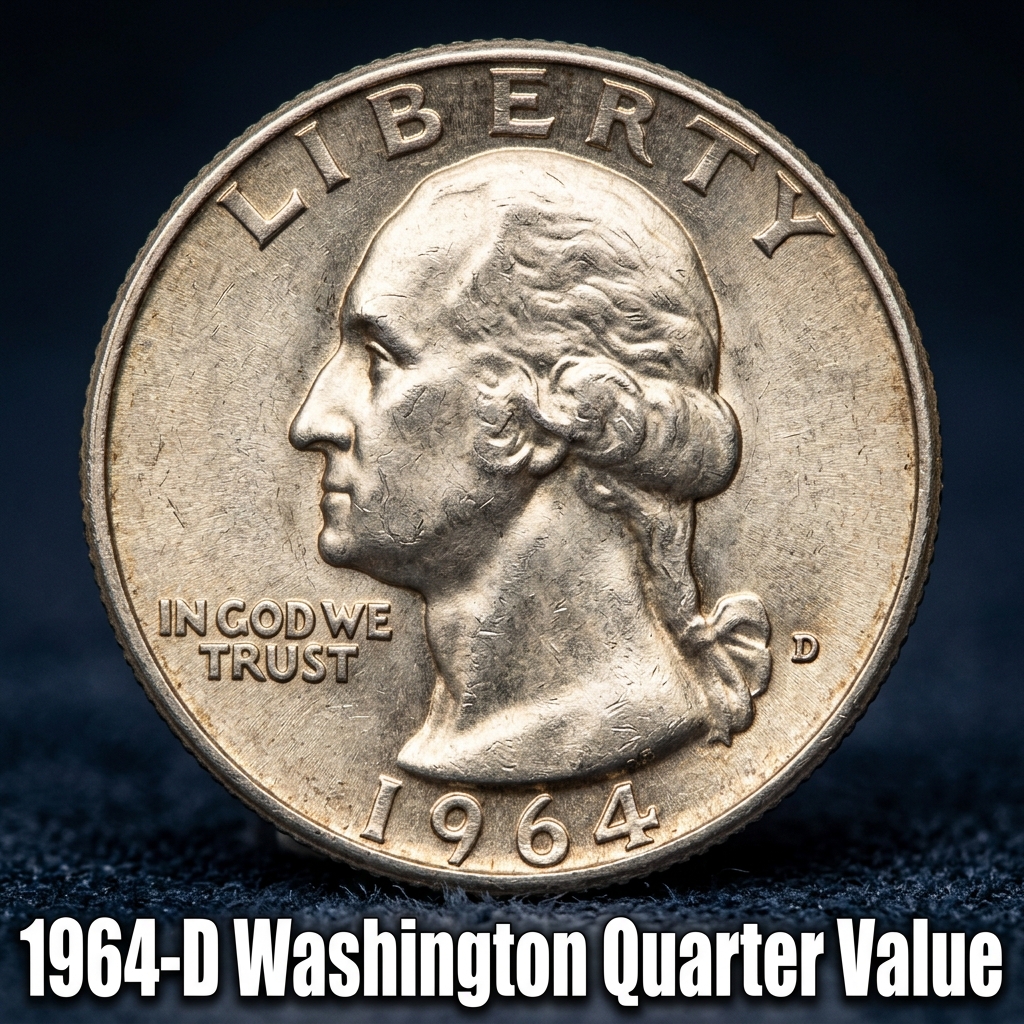
The 1964-D Washington Quarter is worth anywhere from $5 in worn condition to over $1,200 in pristine mint state. If you have found one of these coins in your pocket change or an old jar, you are likely holding a piece of history that is worth significantly more than its face value.
Why the 1964 D Quarter is a Special Treasure
The 1964-D Washington Quarter holds a unique place in American numismatic history. It was the last year that the United States Mint produced quarters intended for circulation with a 90% silver composition. Because of the rising price of silver in the mid-1960s, the government switched to a copper-nickel “sandwich” composition in 1965. This change makes any 1964 quarter, especially those with the “D” mint mark representing the Denver Mint, a valuable find for everyday people.
If you are unsure whether your coin is a silver original or a modern base-metal version, using the best coin identifier app can help you confirm its metal content and origin instantly. Most people recognize these coins by their distinct “ring” when dropped on a table, a sound much clearer than modern quarters. To get a precise reading on your coin’s condition, the CoinHix app is a fantastic tool that uses AI to evaluate the state of your silver treasures.
Understanding the Silver Content and Melt Value
Since the 1964-D quarter is made of 90% silver and 10% copper, it possesses what collectors call “intrinsic bullion value.” Even if the coin is heavily worn, scratched, or damaged, it can never be worth less than the price of the silver it contains. Each coin contains roughly 0.1808 troy ounces of pure silver. When silver prices rise, the baseline value of your quarter rises with it.
For many Americans, these coins serve as a portable silver investment. However, you should never clean your coins, as this can destroy the collector value that sits on top of the silver price. You can check the current 1964 silver quarter market estimates to see how the fluctuating price of precious metals is impacting the street price of your Denver-minted quarters today. Understanding this baseline ensures you don’t accidentally spend a $5 coin on a 25-cent snack.
How Grading Impacts the 1964 D Washington Quarter Value
While the silver content provides a floor for the price, the “grade” or condition of the coin determines the ceiling. Coins are graded on a scale from 1 to 70. Most 1964-D quarters found in old collections are in “Circulated” condition, meaning they have visible wear on George Washington’s hair or the eagle’s feathers. These typically sell for their silver value plus a small premium.
However, if you find a coin that looks like it just came from the mint—with a sharp strike and original luster—the value skyrockets. Professional collectors look for “Mint State” (MS) coins that have no signs of wear. You can view the specific 1964-D MS quarter pricing data to see how a high grade can turn a common silver coin into a high-value asset. Using the CoinHix app can help you compare your coin against high-resolution images of graded specimens to see where yours falls on the scale.
| Condition / Grade | Estimated Market Value |
|---|---|
| Good to Fine (Circulated) | $5.00 – $6.50 |
| Extremely Fine (About Uncirculated) | $7.00 – $12.00 |
| Uncirculated MS63 | $15.00 – $25.00 |
| Uncirculated MS65 (Gem) | $40.00 – $60.00 |
| High Grade MS67+ | $400.00+ |
Look for Rare 1964 D Error Varieties
Not all 1964-D quarters were created equal. Occasionally, the Mint made mistakes that resulted in rare “varieties” which collectors crave. One of the most famous for this year is the “Double Die” error, where the letters or numbers on the coin appear doubled. Another interesting find is the “Type C” reverse, which features a clearer, sharper eagle design usually reserved for proof coins.
To spot these nuances, you need a sharp eye or a specialized digital tool. The CoinHix app allows you to zoom in on specific areas like the mint mark and the lettering to detect these rare strikes. Finding an error on a Denver-minted 1964 quarter can easily triple its value compared to a standard silver specimen. Always look closely at the “D” on the back—located just below the eagle—as some repunched mint mark errors are highly sought after.
Summary of the 1964-D Quarter Value
In conclusion, the 1964-D Washington Quarter is a silver staple that every American should keep an eye out for. Whether you are holding it for its 90% silver bullion content or hoping to find a high-grade Mint State specimen, these coins represent a bridge between the old world of precious metal coinage and the modern era of clad currency. Always check the current silver spot price and use modern identification tools to ensure you get the best price when buying or selling.
Q: How can I tell if my 1964 quarter is from the Denver Mint?
A: Turn the coin to the reverse (the back with the eagle). Look directly below the center of the wreath that the eagle is sitting on. If you see a small “D,” it was minted in Denver. If there is no letter, it was minted in Philadelphia.
Q: Is a 1964-D quarter worth more than a 1965 quarter?
A: Yes, significantly. A 1964-D quarter is 90% silver and worth at least $5, while a 1965 quarter is made of copper and nickel and is generally only worth 25 cents unless it is in perfect condition or has an error.
Q: Where is the best place to sell my 1964-D silver quarters?
A: For common, worn coins, local coin shops or reputable bullion dealers are best. For high-grade or error coins, consider online auctions or professional grading services to maximize your profit.