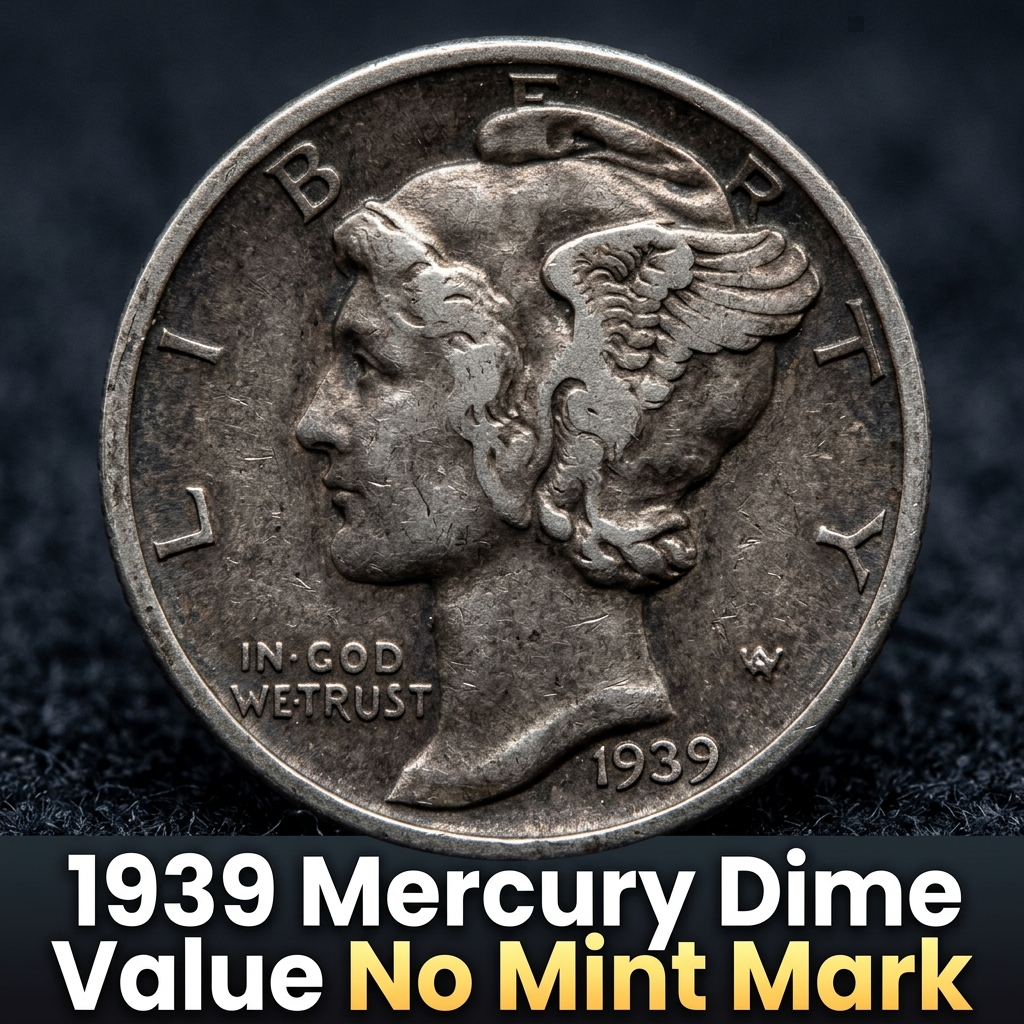
The 1939 Mercury Dime with no mint mark is worth anywhere from $2 to $3 in heavily worn condition, up to $25 or more in lightly circulated grades, and potentially $50 to $100+ in true mint state — making it a surprisingly rewarding find for anyone who comes across one in an old coin jar or estate collection. Whether you’re a casual collector or just curious about that old dime sitting in your drawer, this guide breaks down everything you need to know about its value.
What Does No Mint Mark Mean on a 1939 Dime?
If you flip over your 1939 Mercury Dime and look near the bottom of the reverse side — near the base of the fasces (that bundled rod design) — and you don’t see a letter, that means the coin was struck at the Philadelphia Mint.
Philadelphia was the main U.S. Mint facility and traditionally did not place a mint mark on its coins. So a “no mint mark” 1939 Mercury Dime is actually a Philadelphia coin, not a rarity or error. It’s the most common version of the 1939 Mercury Dime series.
In 1939, the Philadelphia Mint produced over 67 million Mercury Dimes, making this one of the higher-mintage years in the series. High mintage generally means lower scarcity, which affects the coin’s collector value — but condition still plays a massive role.
To quickly identify your coin’s exact details and grade, many collectors now rely on the best coin identifier app available on the market, which can give you an instant estimate right from your phone.
1939 Mercury Dime Value by Grade
Coin value is almost always tied to condition, also called “grade.” Here’s a simple breakdown of what the 1939 No Mint Mark Mercury Dime is worth across common grades:
| Grade | Description | Estimated Value |
|---|---|---|
| Good (G-4) | Heavy wear, outline visible | $2 – $3 |
| Fine (F-12) | Moderate wear, details visible | $4 – $6 |
| Extremely Fine (EF-40) | Light wear on high points | $10 – $20 |
| About Uncirculated (AU-55) | Slight friction, near mint | $20 – $30 |
| Mint State (MS-63) | Uncirculated, minor marks | $40 – $60 |
| Mint State (MS-65+) | Gem quality, full bands | $80 – $150+ |
For an even more detailed look at current market prices by grade, you can check out the latest 1939 Mercury Dime mint state price data pulled from real auction records. Prices can fluctuate, and staying current with the market matters when you’re buying or selling.
What Makes a 1939 Mercury Dime Worth More
Even within the same year and mint, some coins command significantly higher prices. Here’s what can boost the value of your 1939 no mint mark dime:
Full Split Bands (FSB): On the reverse, the horizontal bands crossing the fasces sticks should show a clear, complete split if the coin is well-struck. A 1939 Mercury Dime with Full Split Bands in MS-65 can jump from $60 to well over $100 — sometimes much more.
Original luster: Uncirculated coins with bright, original mint luster are far more desirable than coins that have been cleaned or polished. Cleaning actually destroys value, even if the coin looks shiny.
No damage or spots: Coins free of corrosion, rim nicks, or discoloration always fetch stronger prices.
For a thorough breakdown of what your 1939 dime is worth based on its condition and features, dedicated coin price resources can help you narrow things down quickly before taking it to a dealer.
The Silver Content of a 1939 Mercury Dime
One thing many people don’t realize is that Mercury Dimes are 90% silver. Even a worn, low-grade 1939 no mint mark dime has real metal value beyond its collector price.
Each Mercury Dime contains approximately 0.07234 troy ounces of pure silver. When silver trades at around $28 per troy ounce, that gives the coin a base melt value of roughly $2.00 to $2.10.
This means even the most beaten-up 1939 Mercury Dime is always worth at least its silver melt value — never worth zero. That’s a helpful baseline to remember if you’re not sure whether to sell or keep your coin.
If you want to quickly scan and identify your coins at home and get instant value estimates, CoinHix is a great tool to download. CoinHix uses image recognition to identify coins, estimate grades, and pull real market data — ideal for beginners who don’t want to flip through a price guide manually.
How to Check If Your 1939 Dime Is Genuine
Mercury Dimes are generally not heavily counterfeited because they’re not rare enough to warrant faking in large numbers. However, it’s still worth knowing what to look for.
A genuine 1939 Mercury Dime will have crisp, detailed lettering on both sides. Lady Liberty’s cap and wings should show defined feather detail in fine or better condition. The reverse should display the fasces and olive branch clearly.
Weigh the coin if you can — a real Mercury Dime weighs exactly 2.5 grams. Anything significantly off suggests a fake or a heavily damaged coin.
If you’re unsure, CoinHix lets you photograph your coin for quick digital identification, which can be a good first step before paying for professional grading from PCGS or NGC.
FAQ
Q: Is a 1939 Mercury Dime with no mint mark rare?
A: No, it’s not considered rare. The Philadelphia Mint produced over 67 million of them in 1939, making it one of the more common dates in the Mercury Dime series. Value comes primarily from condition, not rarity.
Q: How much is a 1939 Mercury Dime worth if it’s worn?
A: A heavily worn 1939 no mint mark Mercury Dime in Good condition is typically worth $2 to $3 — close to its silver melt value. Lightly circulated examples in Fine or Extremely Fine grades can bring $4 to $20 depending on sharpness.
Q: What does Full Split Bands mean and why does it matter?
A: Full Split Bands (FSB) refers to the horizontal bands on the reverse fasces showing a complete, clearly divided line. It indicates a well-struck coin and significantly increases value for uncirculated examples — sometimes pushing prices two to three times higher than coins without full bands.