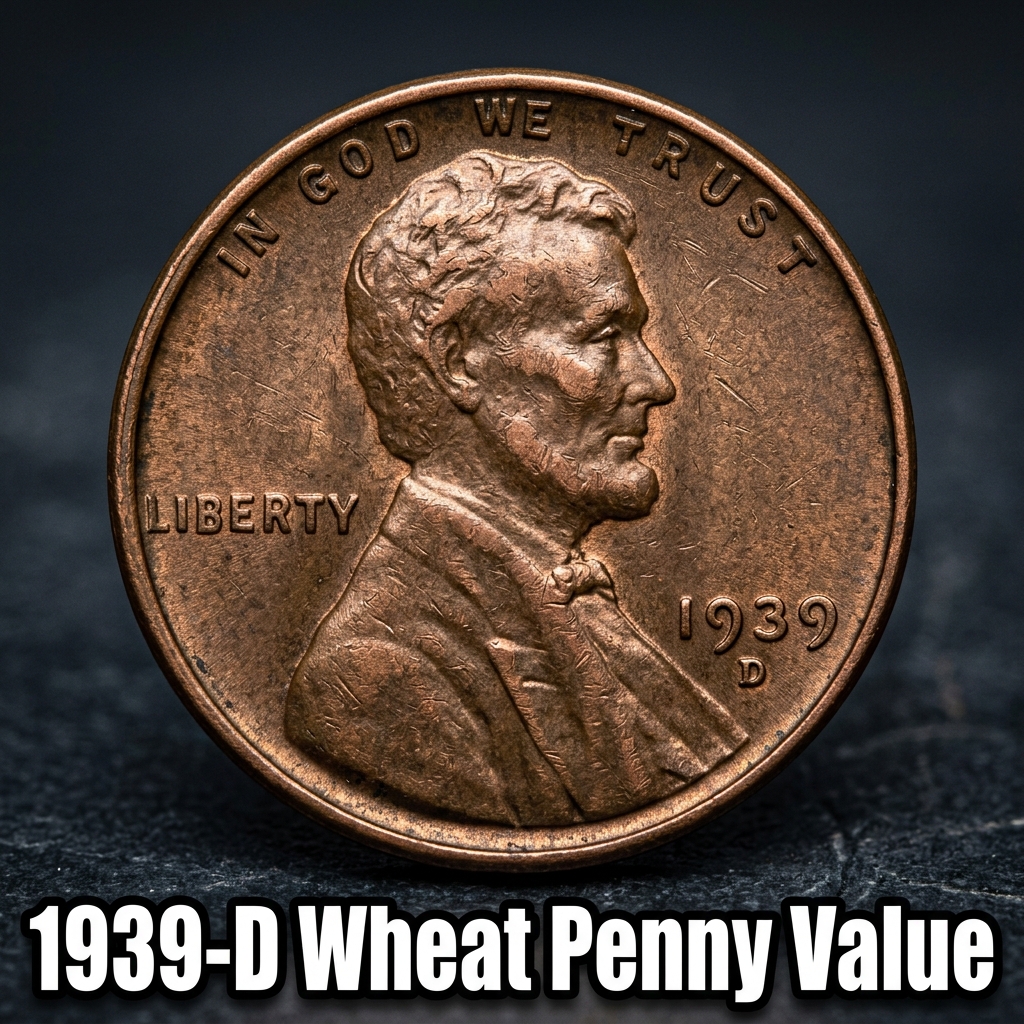
The 1939-D Wheat Penny is worth anywhere from $0.10 in heavily worn condition to over $15 or more in uncirculated grades — and in top mint state examples, it can climb even higher. If you found one of these old Lincoln cents in a coin jar, a drawer, or an inherited collection, you might be sitting on more than pocket change.
What Is the 1939-D Wheat Penny?
The 1939-D Wheat Penny is a Lincoln Wheat Cent struck at the Denver Mint in 1939. You can identify it by the small “D” mintmark located just below the date on the obverse (front) side of the coin. These pennies were made of 95% copper, giving them that warm reddish-brown color that collectors love.
During 1939, the Denver Mint produced over 15 million of these coins, making them moderately available — but not so common that every surviving example is in great shape. The majority of circulated coins show wear from everyday use, which naturally affects their value.
If you’re not sure what you’re looking at, using the best coin identifier app can help you confirm the mintmark, date, and condition of your coin in seconds — a great first step before heading to a dealer.
1939-D Wheat Penny Value by Grade
Coin value depends heavily on condition, which coin experts call “grade.” A coin that looks brand new is worth far more than one that’s been spent and passed through thousands of hands. Here’s a general breakdown of what the 1939-D Wheat Penny is worth across different grades:
| Grade | Condition Description | Estimated Value |
|---|---|---|
| Good (G-4) | Heavy wear, outline visible | $0.10 – $0.25 |
| Fine (F-12) | Moderate wear, some detail | $0.50 – $1.00 |
| Extremely Fine (EF-40) | Light wear on high points | $2.00 – $5.00 |
| About Uncirculated (AU-55) | Slight wear, mostly sharp | $5.00 – $10.00 |
| Mint State (MS-63 RD) | No wear, original red luster | $15.00 – $30.00+ |
| Mint State (MS-65 RD) | Gem quality, full red | $40.00 – $100.00+ |
For the most up-to-date figures based on recent auction sales, you can check out the 1939-D Wheat Penny price data in MS-RD condition to see exactly where top-grade examples are trading right now.
How to Tell What Grade Your 1939-D Penny Is
Grading coins takes practice, but you can get a general sense at home with just a magnifying glass and good lighting. Look at Lincoln’s cheek, hair, and the wheat stalks on the reverse — these are the high points that wear down first.
If the details are flat and blurry, the coin is likely in Good to Fine condition and worth only a few cents to a dollar. If you can see individual strands of hair and the wheat lines are sharp and crisp, you may have a Fine to Extremely Fine coin worth a couple of dollars.
For coins that look nearly untouched — with shiny surfaces and no visible wear — you might have an uncirculated example worth $15 or more. CoinHix is a great tool to help you understand your coin’s grade by comparing it against certified coin images in their database. It takes the guesswork out of the process.
What Makes Some 1939-D Pennies Worth More?
Color matters a lot for Lincoln Wheat Pennies. Coins are graded not just by wear, but also by how much of their original copper color remains. A coin graded MS-65 Red (RD) is worth significantly more than the same grade in Brown (BN), because the original mint luster is still intact.
Strike quality also plays a role. Some 1939-D pennies show weak details due to die wear or improper minting pressure. A sharply struck coin with full details will always command a premium over a weakly struck one in the same grade.
Errors and varieties can also push values higher. While the 1939-D doesn’t have famous major varieties, doubled die or repunched mintmark varieties occasionally surface. These can be worth two to three times the normal value.
You can explore a full breakdown of 1939 Wheat Penny values by date, mint, and grade to see how the Denver issue stacks up against Philadelphia and San Francisco examples from the same year.
Should You Clean Your 1939-D Wheat Penny?
Please don’t. This is one of the most common mistakes new collectors make. Cleaning a coin — even gently — removes the natural patina and surface layer that coin graders look for. A cleaned coin can drop from $10 in value to less than $1, because professional graders will immediately flag it.
If your coin looks dark or dirty, that’s actually fine. A naturally toned 1939-D penny with a chocolate-brown surface is perfectly collectible and expected for a coin that’s over 80 years old. Leave it alone and store it in a coin flip or soft sleeve instead.
Using CoinHix to photograph and catalog your coin before making any decisions is a smart move — you’ll have a record of its original state and can get a better sense of what it’s worth before visiting a dealer or listing it online.
—
FAQ
Q: How much is a 1939-D Wheat Penny worth today?
A: Most circulated examples are worth between $0.10 and $5.00 depending on condition. Uncirculated coins graded MS-63 or higher can be worth $15 to $100 or more, especially in full Red designation.
Q: Where is the mintmark on a 1939-D Wheat Penny?
A: The “D” mintmark is located on the obverse (front) of the coin, just below the date on the right side. It stands for the Denver Mint where the coin was produced.
Q: Is the 1939-D Wheat Penny rare?
A: It’s not considered rare — over 15 million were minted. However, high-grade examples with original red luster are harder to find and worth considerably more. CoinHix can help you quickly assess whether your coin falls into that desirable upper tier.