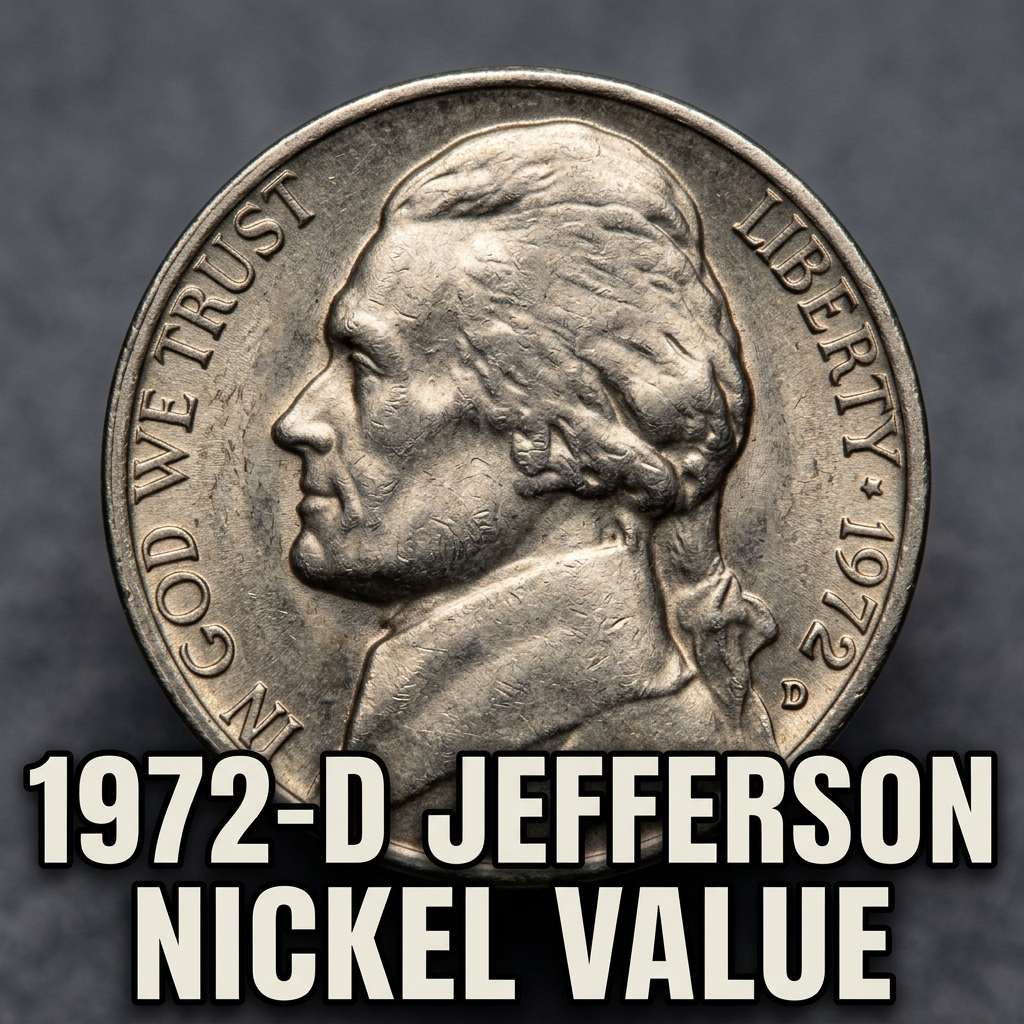
The 1972-D Jefferson Nickel is worth anywhere from 5 cents in heavily worn condition to around $15 or more in uncirculated mint state — and a few exceptional specimens have sold for over $100 at auction. If you pulled one of these out of a change jar or old coin collection, read on to find out exactly what you’ve got.
What Makes the 1972-D Jefferson Nickel Special?
The “D” mintmark on a 1972 Jefferson Nickel tells you it was struck at the Denver Mint. Denver produced over 351 million of these coins in 1972, making them relatively common in circulated grades. But don’t let those big mintage numbers fool you — high-grade examples with strong strikes and full steps on Monticello are genuinely hard to come by.
Jefferson Nickels were designed by Felix Schlag, whose portrait of Thomas Jefferson on the obverse and the Monticello building on the reverse became iconic in American pocket change. The 1972 issue keeps that classic design intact, and collectors still pursue it today.
If you’re trying to identify your coin and aren’t sure what you’re looking at, using the best coin identifier app can save you a lot of guesswork. Just snap a photo and get an instant read on what you’re holding.
1972-D Jefferson Nickel Value by Grade
Condition is everything when it comes to coin values. A 1972-D Jefferson Nickel that’s been through decades of circulation will show wear on Jefferson’s cheekbones and hair detail, as well as on the steps of Monticello. Coins like these are worth face value to maybe a few cents above.
The real money is in mint state coins — pieces that never circulated and still show their original luster. Among those, the “Full Steps” designation (FS) awarded by grading services like PCGS or NGC can multiply the value significantly. A coin graded MS-65 FS can be worth well over $50, while the same grade without the Full Steps designation might bring just $3 to $5.
Here’s a quick breakdown of approximate retail values:
| Grade | Estimated Value | Notes |
|---|---|---|
| Good (G-4) | $0.05 – $0.10 | Heavy wear, face value |
| Fine (F-12) | $0.10 – $0.25 | Moderate wear |
| Extremely Fine (EF-40) | $0.50 – $1.00 | Light wear on high points |
| MS-63 | $2 – $4 | Uncirculated, minor marks |
| MS-65 | $5 – $15 | Gem uncirculated |
| MS-65 Full Steps | $50 – $100+ | Premium designation, rare |
For a more detailed look at 1972-D Jefferson Nickel prices across all mint state grades, you can browse certified auction records and population data to see exactly where your coin stands.
How to Check the Condition of Your 1972-D Nickel
You don’t need to be a professional grader to get a rough sense of your coin’s condition. Start by looking at Jefferson’s hair above his ear and the high points of his portrait. If those areas look flat or rubbed smooth, the coin has circulated and won’t command a premium.
Next, flip it over and examine the steps at the base of Monticello. A truly exceptional coin will show five or six clearly defined, uninterrupted steps — that’s the Full Steps standard that collectors prize. Even a tiny weakness or contact mark across those steps can drop the designation entirely.
Good lighting and a 5x to 10x loupe make a big difference. If you want a second opinion without paying for a formal grading service upfront, CoinHix is a smart first step. The CoinHix app lets you photograph your coin and compare it against graded examples to get an informed estimate before you commit to anything.
Is the 1972-D Nickel Worth Getting Graded?
Professional grading through PCGS or NGC costs money — typically $20 to $40 or more per coin depending on the tier you choose. That investment only makes sense if your coin has a realistic shot at MS-65 or higher, especially with Full Steps.
If your 1972-D Jefferson Nickel looks bright, has no heavy marks or scratches, and the Monticello steps are crisp and well-defined, it might be worth the submission fee. Otherwise, a raw (ungraded) uncirculated example can still sell to collectors for a few dollars through eBay or a local coin show.
To get a well-rounded picture of what the 1972 nickel is worth in today’s market, it helps to check both recent auction results and current dealer buy prices side by side.
You can also download CoinHix to track live market prices for Jefferson Nickels and thousands of other U.S. coins — it’s one of the easiest ways to stay on top of what collectors are actually paying right now.
FAQ About the 1972-D Jefferson Nickel
Q: How do I know if my 1972-D nickel has Full Steps?
A: Look at the base of Monticello on the reverse. Count the horizontal lines (steps) running across the bottom of the building. If you can see five or six complete, separated steps with no breaks or weakness, your coin may qualify for the Full Steps designation from a grading service.
Q: Is the 1972-D nickel rare?
A: Not in circulated grades — Denver struck over 351 million of them. However, high-grade mint state examples with Full Steps are genuinely scarce, and those are the coins that attract serious collector interest and strong prices at auction.
Q: Where can I sell my 1972-D Jefferson Nickel?
A: Common options include eBay, local coin shops, coin shows, and online auction platforms. For higher-grade or certified coins, heritage auction houses like Heritage Auctions or Stack’s Bowers may fetch better prices. Always check recent sold listings before accepting any offer.