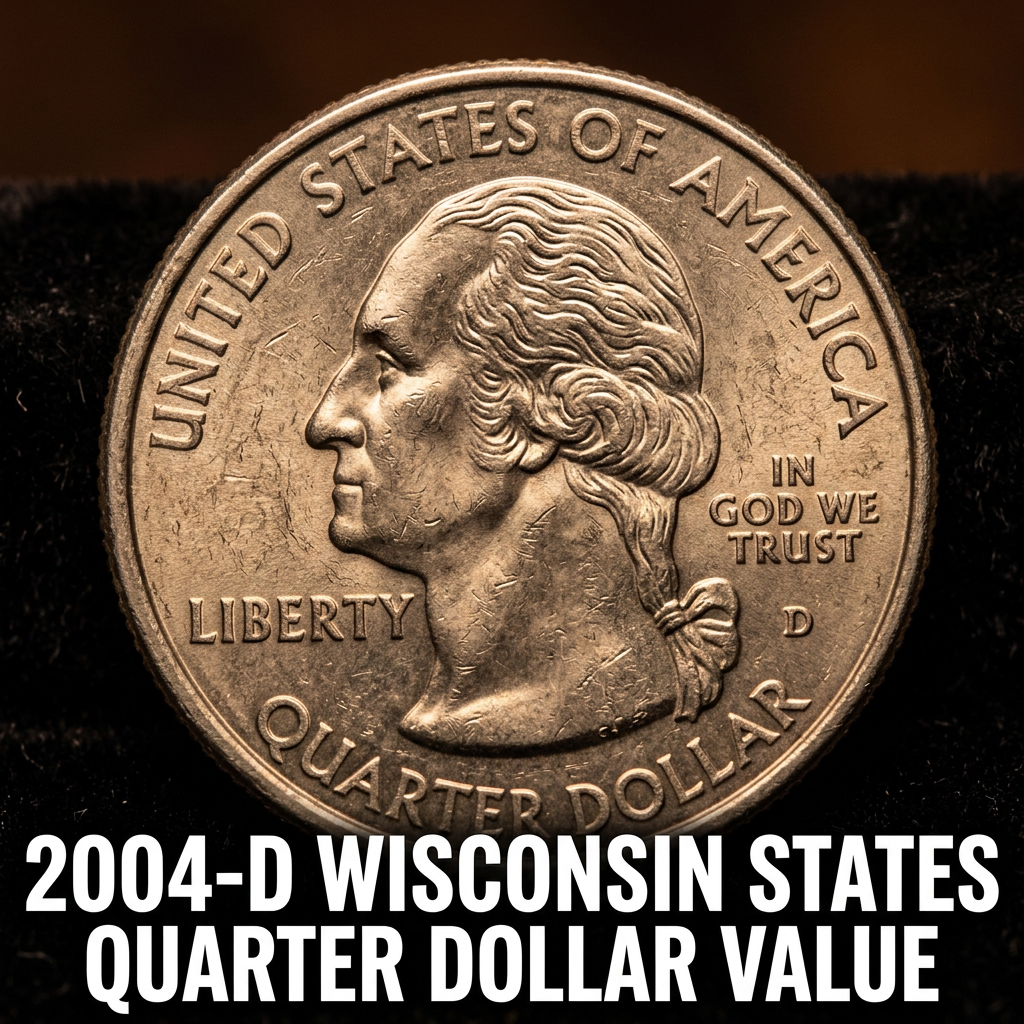
The 2004-D Wisconsin State Quarter is worth anywhere from 25 cents in everyday circulated condition to over $300 or more if you happen to have one of the rare error varieties. Most people toss these coins into a jar without a second thought — but a few lucky folks are sitting on something genuinely valuable.
If you’ve recently dug one of these out of a change jar or old coin collection, you’re smart to look it up. The 2004-D Wisconsin quarter was minted at the Denver Mint as part of the popular 50 State Quarters Program. It features a cow, a wheel of cheese, and an ear of corn on the reverse — classic Midwest imagery. But what makes some of these coins exciting isn’t the design. It’s the errors.
To quickly figure out what you’ve got, many collectors recommend using the best coin identifier app on your phone before anything else. It can save you hours of guesswork.
The Regular 2004-D Wisconsin Quarter — What Most People Have
Let’s start with the basics. If your 2004-D Wisconsin quarter has no obvious flaws or unusual markings, it’s a standard issue coin. In circulated condition — meaning it’s been used and shows some wear — it’s worth face value or maybe a few cents above that.
In uncirculated condition (meaning it was never used and still has its original mint luster), the value climbs a bit. A typical MS-63 grade coin might fetch $1 to $3, while a gem uncirculated MS-65 example could be worth $5 to $15.
Coins graded MS-67 and above by a professional grading service like PCGS or NGC can sell for $50 to $100 or more — though those are genuinely rare finds. For most people, the standard 2004-D Wisconsin quarter is a nice piece of American history but not a retirement plan.
The Error Coins That Made This Quarter Famous
Here’s where things get interesting. Shortly after the 2004-D Wisconsin quarters were released, collectors noticed something strange: some coins had an extra leaf on the ear of corn in the design. This wasn’t supposed to be there.
Two varieties emerged — the Extra Leaf High and the Extra Leaf Low, depending on where the extra leaf appears relative to the corn. These error coins quickly became some of the most talked-about modern quarter errors in U.S. coin collecting history.
An Extra Leaf Low or Extra Leaf High coin in circulated condition can sell for $100 to $200. In mint state, certified examples have sold for $300, $400, or even more. These are real, verified values — not wishful thinking. If you think you might have one, look closely at the left side of the corn cob on the reverse. If there’s an extra leaf sticking out that doesn’t look like it belongs, you could be holding something special.
2004-D Wisconsin Quarter Value Chart
Here’s a quick breakdown of values depending on condition and variety:
| Variety | Circulated | MS-63 | MS-65+ |
|---|---|---|---|
| Standard 2004-D Wisconsin | $0.25 – $1 | $1 – $5 | $10 – $50 |
| Extra Leaf High Error | $100 – $200 | $200 – $300 | $300 – $500+ |
| Extra Leaf Low Error | $100 – $175 | $175 – $275 | $275 – $450+ |
For more detail on how the 2004 state quarters from Denver compare to other mint issues, you can check out up-to-date 2004 State Quarter price data across mint grades to see how the market has been trending.
How to Tell If Your Coin Is Genuine and Worth Grading
Before you get too excited, it’s important to make sure what you have is the real deal. Counterfeit error coins do exist, and some people attempt to alter coins to make them look like the extra leaf variety.
The best way to verify your coin is to have it authenticated by PCGS or NGC. Both services charge a fee, but if your coin turns out to be a genuine Extra Leaf error, that fee is absolutely worth it.
In the meantime, CoinHix is a great tool to get a quick sense of your coin’s value before committing to a professional submission. The CoinHix app lets you browse recent sale prices and compare your coin’s details to known examples — helpful whether you’re a first-timer or a seasoned collector.
You can also explore a full breakdown of 2004 quarter values across all mints and conditions to understand where your coin fits in the broader picture.
Should You Hold On To It or Sell?
If you have a standard 2004-D Wisconsin quarter, it’s a nice keepsake but not worth much financially. However, if you have an error coin — especially a certified one — holding it could pay off. These coins have maintained strong collector demand for two decades, and they’re not getting any more common.
If you do decide to sell, platforms like eBay, Heritage Auctions, or local coin shows are all solid options. Just make sure you have documentation or a graded holder before listing it, so buyers can trust what they’re getting. And before any of that, run it through CoinHix to get a realistic sense of the current market.
FAQ
Q: How do I know if my 2004-D Wisconsin quarter has the extra leaf error?
A: Look at the left side of the corn cob on the reverse of the coin. You should see a regular leaf curling down. If there’s an additional, oddly placed leaf — either pointing up (Extra Leaf High) or curving down lower (Extra Leaf Low) — you may have an error coin. Use a magnifying glass for a closer look.
Q: Is the 2004-D Wisconsin quarter worth getting professionally graded?
A: Only if you believe you have an error variety or an exceptionally well-preserved uncirculated example. Standard circulated coins aren’t worth the grading fees. Error coins, however, can more than justify the cost.
Q: Where can I sell a 2004-D Wisconsin quarter error coin?
A: eBay is the most accessible marketplace, but for higher-value coins, Heritage Auctions or Stack’s Bowers will reach serious collectors willing to pay top dollar. Always have the coin authenticated before selling to get the best price and build buyer trust.