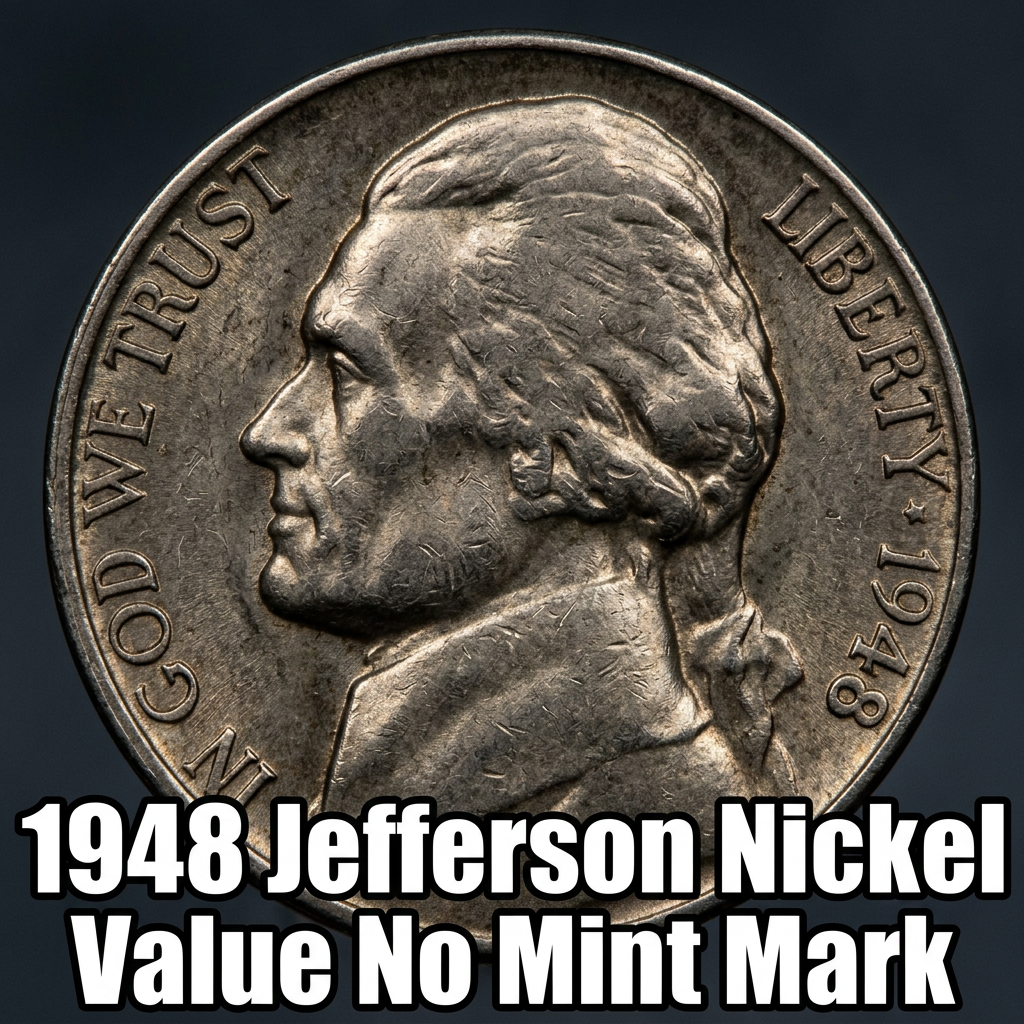
The 2004-S Florida State Quarter is worth anywhere from $0.25 for a circulated clad version to over $100 for a high-grade Silver Proof. While most quarters you find in change are face value, the “S” mint mark quarters from San Francisco were struck specifically for collectors and often carry a significant premium.
| Coin Version | Average Value (PR65-69) | Top Value (PR70) |
|---|---|---|
| 2004-S Florida Clad Proof | $3 – $7 | $25+ |
| 2004-S Florida Silver Proof | $12 – $18 | $50 – $110 |
Understanding the 2004-S Florida State Quarter Minting
If you’ve discovered a shiny Florida quarter with an “S” under the “In God We Trust” motto, you’ve found a Proof coin. Unlike the millions of quarters made in Philadelphia or Denver for daily spending, these were minted in San Francisco using polished dies and planchets. This process creates a mirror-like background and frosted details.
To identify if your coin is worth more than twenty-five cents, using the best coin identifier app can help you distinguish between the Clad and Silver varieties. The 2004-S Florida quarter was the 27th coin released in the 50 State Quarters Program. It features the Space Shuttle Discovery, a 16th-century Spanish galleon, and several Sabal palm trees, all centered around the inscription “Gateway to Discovery.”
For regular folks, the excitement comes from the fact that these coins weren’t meant for circulation. If you find one in your pocket change, it was likely broken out of a collector set by mistake. Even in “impaired” condition (showing scratches), it might still be worth a small premium because of its composition or rarity compared to the billions of “P” and “D” minted coins.
The Difference Between Clad and Silver 2004-S Proofs
Not all 2004-S Florida quarters are made of the same metal. This is the most critical factor in determining your coin’s value. The San Francisco mint produced two versions: the Copper-Nickel Clad and the 90% Silver Proof. If you aren’t sure which one you have, the CoinHix app can provide visual guides to help you tell them apart.
The easiest way to tell is to look at the edge of the coin. If you see a copper stripe (orange/red color), it is a standard Clad Proof. If the edge is solid bright silver with no copper stripe, you likely have the 90% Silver version. The Silver version weighs 6.25 grams, while the Clad version weighs 5.67 grams.
Collectors pay a much higher price for the Silver version because of its precious metal content and lower mintage. You can check the current market value for 2004 State Quarters to see how silver prices influence these collector coins. Generally, a Silver Proof is worth at least its weight in silver, while a Clad Proof is only worth its “collector appeal.”
| Feature | Clad Proof (S) | 90% Silver Proof (S) |
|---|---|---|
| Composition | Copper-Nickel | 90% Silver, 10% Copper |
| Weight | 5.67g | 6.25g |
| Edge Color | Bi-color (Copper stripe) | Solid Silver |
Grading Your 2004-S Florida State Quarter Dollar
Coin value is secondary to condition. For Proof coins, grading uses the “PR” (Proof) scale ranging from 1 to 70. A PR70 is a perfect coin with no visible flaws under 5x magnification. Most Florida quarters found in original mint packaging will grade between PR67 and PR69.
If your coin has been handled and has lost its mirror-like shine, it is considered an “impaired proof.” These are worth significantly less than those in protective cases. However, if you have a perfect PR70 specimen, the value jumps significantly. Serious collectors often use tools like CoinHix to compare their coins against high-resolution photos of certified grades.
The Deep Cameo (DCAM) or Ultra Cameo designation is also important. This refers to the contrast between the frosted design elements and the mirror fields. All 2004-S Florida quarters were struck to be Deep Cameo, so if yours looks “flat” or doesn’t have that strong contrast, it may have been damaged by environmental factors or cleaning, which hurts the value.
Are There Any 2004-S Florida Quarter Errors?
While the San Francisco Mint has very strict quality control for Proof sets, errors can still happen. The most common “errors” people look for on Florida quarters are Broadstrikes or Double Dies. However, in the Proof series, errors are extremely rare.
Checking the detailed 2004 Florida quarter price list can reveal if any specific known varieties have been discovered recently. If you find a 2004-S Florida quarter that appears to have a “double” image on the lettering, you might be looking at a Doubled Die. Because Proof coins are struck twice by the die to ensure detail, a misalignment can cause rare and valuable doubling.
Another thing to look for is “clipping.” This happens when the coin is struck on an incomplete planchet. While extremely rare in Proof sets, a 2004-S Florida Quarter with a major error could be worth hundreds of dollars because it shouldn’t have passed inspection at the San Francisco Mint.
Market Demand for the Florida State Quarter
The 50 State Quarters program remains one of the most popular series for casual collectors. Florida, being a high-population state with a rich history of space exploration and maritime travel, has one of the more popular designs.
Currently, the marketplace is somewhat saturated with 2004-S Proof sets, which keeps the prices for lower grades (PR65-PR68) relatively affordable. However, the 90% Silver versions are always in demand because they hedge against inflation through their metal content. If you are looking to sell, the CoinHix app can help you track real-time auction results to ensure you get a fair price.
Remember that “raw” (uncertified) coins are harder to sell for top dollar. To get the prices listed in professional guides, the coin usually needs to be graded by a service like PCGS or NGC. For most people, a 2004-S Florida Quarter is a beautiful “treasure” piece that is worth keeping in a collection rather than trying to sell for a small profit.
| Mintage Type | Approximate Mintage | Rarity Scale |
|---|---|---|
| 2004-P Florida (Circulation) | 240,200,000 | Common |
| 2004-D Florida (Circulation) | 241,600,000 | Common |
| 2004-S Clad Proof | 2,740,684 | Low Mintage |
| 2004-S Silver Proof | 1,769,786 | Scarce |
How to Store your 2004-S Florida Quarters
Because these coins are Proofs, their value depends entirely on their shiny surface. One fingerprint can ruin the value of a Proof coin because the oils from your skin contain acids that eat into the metal over time. Always handle these coins by the edges, or better yet, keep them in their original US Mint plastic lens.
If you found a loose 2004-S quarter, place it in a PVC-free “flip” or a plastic capsule. Do not clean the coin! Cleaning a coin creates microscopic scratches that professional graders can see instantly, and it can reduce the value by 50% or more. A raw, uncleaned Silver Florida Proof will always be more desirable than a “shiny” one that has been scrubbed with polish.
Keeping your coins in a cool, dry place is essential. Humidity can cause spotting (often called “milk spots”) on the surface of silver quarters. Protecting your investment ensures that when you’re ready to check the value again on CoinHix in a few years, the coin will have maintained its beauty and its price.
FAQ
Q: Why does my Florida quarter have an ‘S’ mint mark?
A: The ‘S’ stands for the San Francisco Mint. Quarters with this mark were produced as “Proof” coins specifically for collectors and were sold in sets. They were never intended to be spent in grocery stores or vending machines.
Q: Is a 2004-S Florida quarter made of real silver?
A: It depends! Some are made of a standard copper-nickel “clad” composition, and some are 90% silver. Check the edge of the coin: if it has a copper-colored stripe, it is clad. If it is solid silver-white, it is 90% silver.
Q: How much is a Florida quarter with a ‘P’ or ‘D’ mint mark worth?
A: Quarters with a ‘P’ (Philadelphia) or ‘D’ (Denver) mint mark from 2004 are generally only worth their face value of 25 cents, unless they are in absolutely flawless, uncirculated condition or have a major mint error.
Q: Where can I sell my 2004-S Florida Silver Quarter?
A: You can sell it to local coin shops, through online auction sites like eBay, or at coin shows. Before selling, use an app to verify the current “Spot Price” of silver to ensure you are getting at least the melt value for the coin.