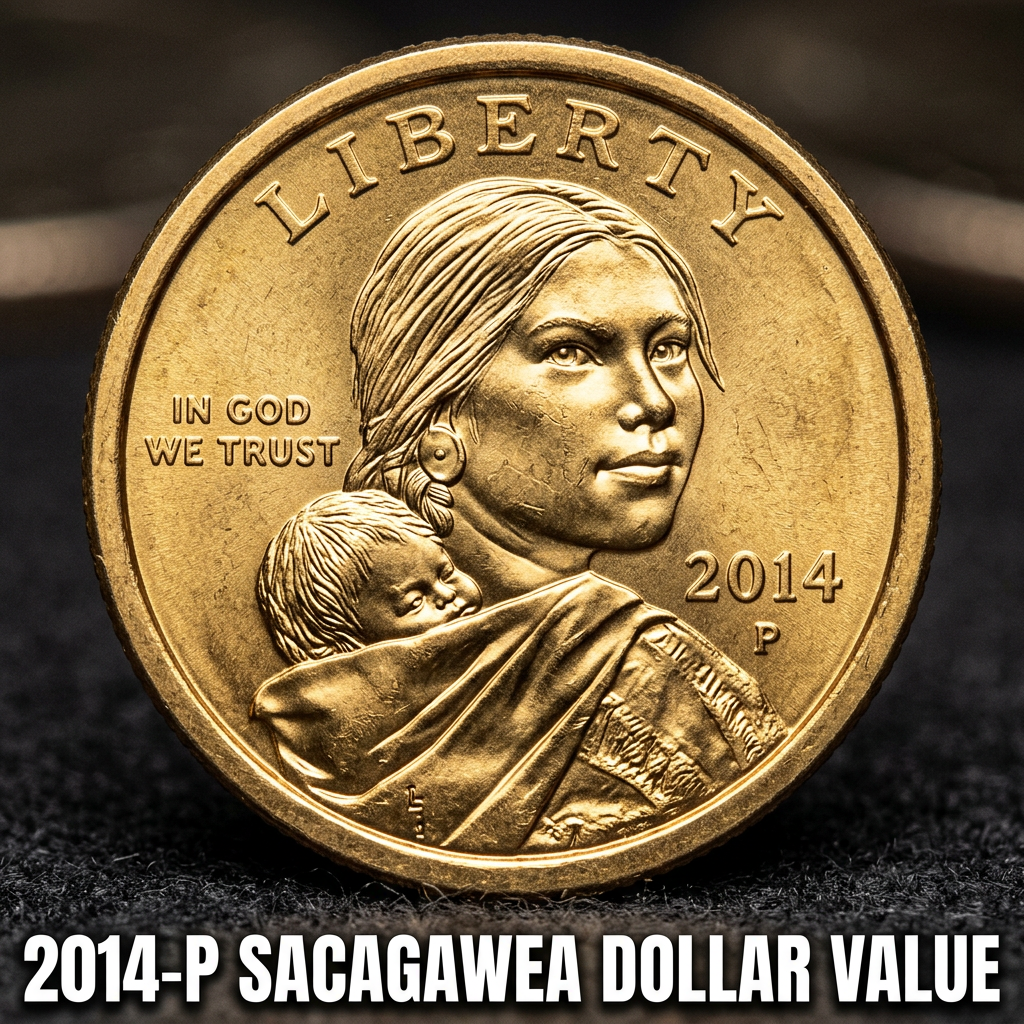
The 2014 P Sacagawea Dollar is worth anywhere from $1 in circulated condition to over $500 in high-grade mint state condition. While most of these golden-colored coins you find in pocket change are only worth their face value, certain specimens and errors can be quite valuable to collectors today.
Understanding the 2014 P Native American Dollar Design and History
The 2014 P Sacagawea Dollar belongs to the broader Native American $1 Coin series, which began in 2009. While the obverse retains the classic portrait of Sacagawea designed by Glenna Goodacre, the reverse changes annually to celebrate different aspects of Native American history. In 2014, the theme was “Native Hospitality,” featuring a reverse design by Chris Costello that depicts a Native American man offering a pipe and his wife offering a basket of food.
If you have stumbled upon one of these coins while cleaning out a drawer or receiving change from a vending machine, you might wonder if you have struck gold. Using the best coin identifier app can help you distinguish between a common circulation strike and a rare variety. To the untrained eye, many of these coins look identical, but the “P” mint mark indicates it was produced in Philadelphia. Because these coins were not released into general circulation for daily use by the Federal Reserve after 2011, most 2014 P dollars were sold directly to collectors at a premium, making them slightly harder to find in the wild.
Current Market Value and 2014 P Sacagawea Dollar Price Guide
Determining the exact value of your coin depends heavily on its “Grade”—a measure of its physical condition. Most 2014 P dollars found in loose change are considered “Circulated” or “About Uncirculated.” These generally trade for exactly $1.00 or perhaps a small premium of $1.10 to $1.50 if they are exceptionally clean. However, those that remain in original mint packaging or were carefully preserved can fetch much higher prices among serious numismatists.
Using CoinHix to track live auction results is a great way to see what buyers are actually paying. For instance, the current 2014 P Sacagawea Dollar market price for MS grades shows that coins graded MS67 or MS68 can command prices well into the hundreds. At the highest levels of preservation—MS69—these coins become true rarities. Collectors are willing to pay a premium for a “flawless” look, free of the milk spots or scratches common to these copper-core, manganese-brass clad coins.
| Condition Grade | Estimated Market Value |
|---|---|
| Circulated / Extra Fine (XF) | $1.00 – $1.25 |
| Uncirculated (MS60 – MS63) | $2.00 – $5.00 |
| Choice Mint State (MS65 – MS66) | $10.00 – $25.00 |
| Superb Gem (MS67+) | $100.00 – $650.00 |
Specific Factors That Boost the 2014 P Sacagawea Worth
When examining your coin, look closely at the edges. Since 2009, the date, mint mark, and the motto “E Pluribus Unum” are incused on the edge of the coin rather than on the faces. This is known as edge lettering. Sometimes, errors occur during this process. Collectors often look for “Position A” or “Position B” edge lettering, which refers to whether the lettering is right-side up or upside down when the portrait is facing up. While neither is inherently rare, some collectors prefer to have one of each.
You should also check for “striking errors.” Because the 2014 P was produced in lower quantities compared to the billions of pennies and quarters made each year, quality control is usually high. However, if you find a coin that is missing its edge lettering entirely, or one that appears double-struck, you could have a very valuable item on your hands. Browsing the 2014 Sacagawea dollar price trends and rarity guide can provide deep insights into how these anomalies impact the bottom line. By using tools like CoinHix, you can compare your find against authenticated error coins sold in recent years.
How to Tell If Your Sacagawea Dollar Is Rare
The most important thing for an everyday person to understand is that luster matters. A dull, brown-looking 2014 P dollar is almost certainly just worth its face value. These coins were minted for collectors only; however, they do occasionally find their way into circulation through bank rolls or when people spend their collections. If your coin looks “white-hot” bright or has a mirror-like finish, it deserves a closer look.
To truly know if you have a winner, consider the “eye appeal.” A coin with no marks on Sacagawea’s face or on the reverse hospitality scene will command the highest prices. Before you decide to spend it at the grocery store, use CoinHix to scan the coin’s features. Remember, while a standard 2014 P is common, a high-grade specimen is a treasure worth saving. Many people mistake these for the “Cheerios Dollar” from 2000, which is worth thousands, but even the 2014 version has its own specific niche in the market.
Q: Is the 2014 P Sacagawea Dollar made of real gold?
A: No, these coins are “Golden Dollars” in color only. They are actually made of a core of pure copper with an outer layer of manganese brass, which gives them that distinct yellow-gold hue.
Q: Where can I find the mint mark on my 2014 P dollar?
A: Unlike older US coins, the mint mark for the 2014 P is located on the edge of the coin. You will need to look at the side (the “rim”) to find the letter “P” engraved there.
Q: Why isn’t my 2014 P dollar in my pocket change?
A: The US Mint stopped producing Sacagawea dollars for general circulation in 2011 due to high inventories. Since 2012, they have only been struck for collectors, which is why you rarely see them in daily transactions.