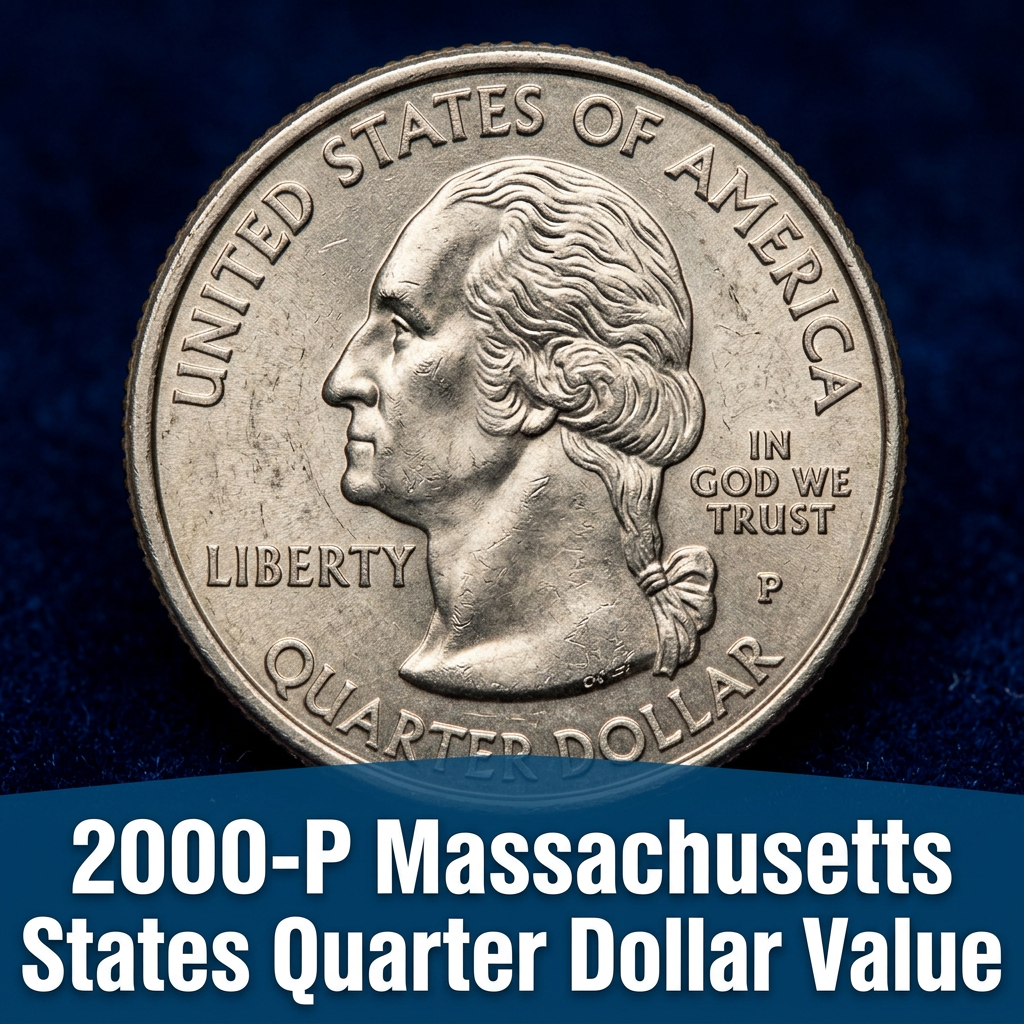
The 2000-P Massachusetts State Quarter is worth anywhere from its $0.25 face value in worn condition to over $50 in high-grade mint state. While most of these coins found in your change are only worth a quarter, spotting a rare mint error or a pristine specimen can significantly increase its payout.
History and Design of the Massachusetts State Quarter
The Massachusetts quarter was the sixth coin released in the 50 State Quarters Program, hitting circulation in early 2000. It celebrates “The Bay State” with a design featuring a Minuteman, a classic symbol of the American Revolutionary War, standing in front of an outline of the state. These coins were struck at the Philadelphia Mint, indicated by the small “P” mint mark located on the obverse behind George Washington’s hair.
If you have stumbled upon one of these in your kitchen jar, you might be wondering how to tell its true value. Using a best coin identifier app can help you quickly distinguish between a common circulation strike and a potential treasure. For most people, the 2000-P Massachusetts quarter is a common find, as over 628 million were produced. However, the condition of the coin is the primary factor that dictates whether it is a keepsake or just pocket change.
When evaluating your collection, remember that professional grading can be expensive. Before sending a coin off, use the CoinHix app to get a preliminary idea of the grade and potential worth. This allows you to focus on the gems that actually carry a premium in the collector market.
Understanding the Current Market Value
The value of the 2000-P Massachusetts quarter fluctuates based on the demand from collectors completing sets. Most quarters found in daily transactions are “circulated,” meaning they show signs of wear, scratches, or dullness. These are generally worth face value. However, coins that were pulled from original mint sets or bank rolls and have never been spent are considered “Uncirculated” or “Mint State” (MS).
A typical uncirculated example might fetch $1 to $5. However, the market price for 2000-P Massachusetts quarters in top condition can soar much higher. Specifically, coins that receive a grade of MS-67 or MS-68 from services like PCGS or NGC are much rarer and can sell for $20 to $100. If you are lucky enough to find an MS-69 specimen, you are looking at a coin worth hundreds of dollars.
To keep track of these price shifts, many collectors use the CoinHix platform. It provides real-time updates on auction results, ensuring you don’t sell a valuable coin for less than it’s worth. Checking the latest valuation data for 2000 quarters is the best way to stay informed about what buyers are currently paying.
| Condition / Grade | Estimated Value (USD) |
|---|---|
| Circulated (Average Wear) | $0.25 |
| Uncirculated (MS-63) | $1.50 – $3.00 |
| Choice Uncirculated (MS-65) | $5.00 – $12.00 |
| Gem Uncirculated (MS-67+) | $45.00 – $150.00+ |
Identifying Rare Errors on the 2000-P Massachusetts Quarter
One of the most exciting ways to find value in modern quarters is by hunting for mint errors. While the Philadelphia Mint usually maintains high quality, mistakes do happen. Common errors to look for on the 2000-P Massachusetts coin include “Die Cracks,” where the metal of the coin seeps into cracks on the stamp, or “Off-Center Strikes,” where the design is not centered on the planchet.
Another error type is the “Double Die,” though major doubled dies are rare for this specific year. You should also keep an eye out for “Grease Strikes,” where debris fills part of the design, making certain letters or parts of the Minuteman appear blurry or missing. Errors are highly sought after by specialty collectors and can turn a 25-cent coin into a $50 or $100 prize depending on the severity of the mistake.
If you suspect you have an error coin, don’t clean it! Cleaning a coin can permanently damage its surface and destroy its numismatic value. Instead, take a high-resolution photo and upload it to the CoinHix community or use their scanning feature to compare your find with known error examples.
How to Store and Protect Your Coins
If you find a 2000-P Massachusetts quarter that looks shiny and new, or several that you want to keep for a future collection, proper storage is vital. Exposure to air, moisture, and the oils from your skin can cause tarnishing or “toning.” For quarters you believe are worth more than face value, use individual cardboard “2×2” flips or plastic capsules.
Long-term value is preserved when the original mint luster remains intact. This is especially true for the state quarter series, where so many coins were minted that only the “best of the best” hold significant financial value over time. Holding your coin by the edges helps prevent fingerprint marks that can turn into permanent stains.
As you build your collection, you can use digital tools to catalog your inventory. By logging your finds in a mobile tracker, you can watch the total value of your collection grow as prices for high-grade specimens naturally rise over the coming years.
Q: How can I tell if my 2000-P Massachusetts quarter is valuable?
A: Check the condition first; if it looks like it just came from the mint with no scratches, it may be worth a few dollars. Look for errors like off-center strikes or missing details, as these are the most valuable varieties.
Q: Is a Massachusetts quarter with a “P” mint mark rarer than others?
A: No, the “P” mint mark stands for Philadelphia, which minted over 628 million of these coins. It is just as common as the “D” (Denver) mint mark, though specific high-grade “P” coins can occasionally be harder to find in some regions.
Q: Should I spend my 2000-P Massachusetts quarters?
A: If they are heavily worn or scratched, they are likely only worth $0.25 and are safe to spend. If the coin is in perfect condition or has a visible error, you should keep it and have it evaluated.