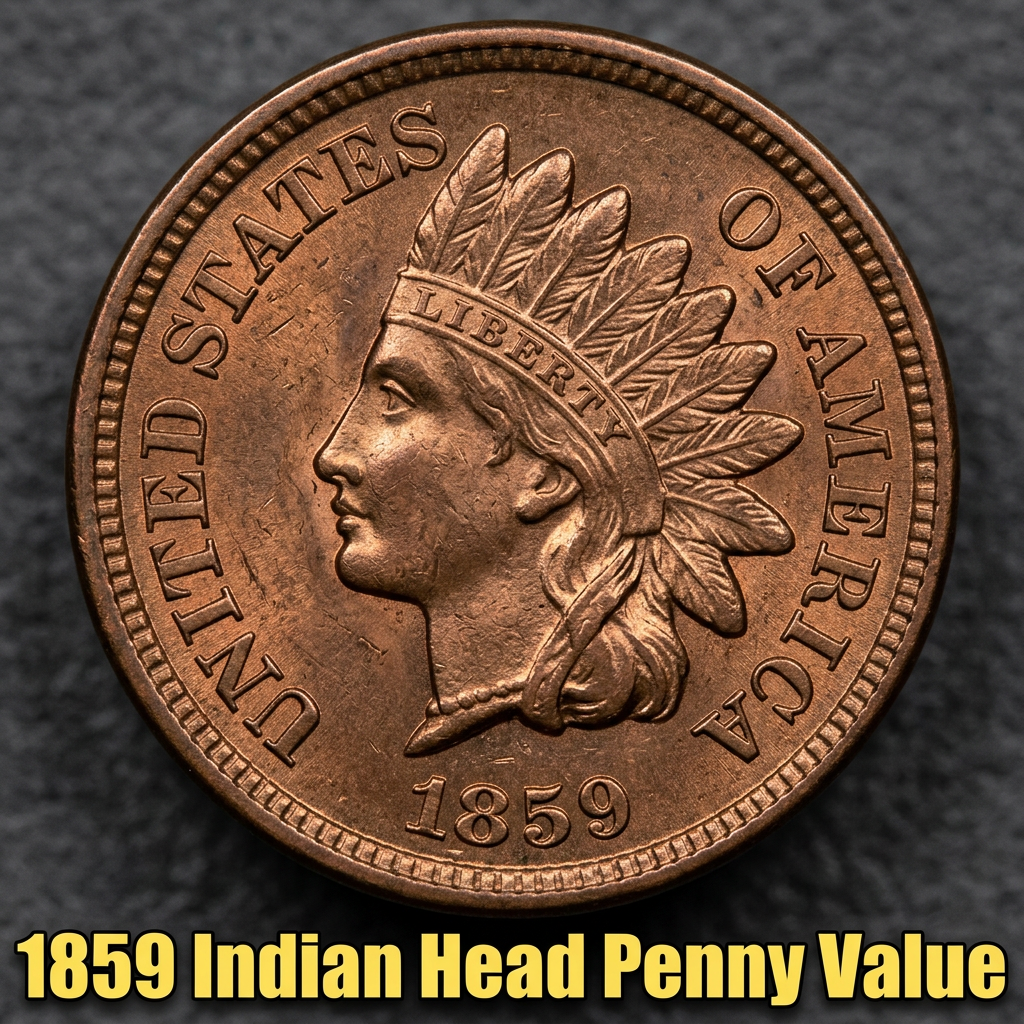
The 1859 Indian Head Penny is worth anywhere from $10 in worn condition to over $600 in premium uncirculated mint state. This specific year is highly coveted by collectors because it represents the very first year the iconic Indian Head design was ever struck for circulation by the United States Mint.
Historic Significance of the 1859 Indian Head Cent
The year 1859 marked a major turning point in American numismatic history as the Mint transitioned away from the Flying Eagle design. When you hold an 1859 penny, you are holding a “one-year type” coin, meaning its reverse design is unique to this specific year. While later Indian Head pennies featured a shield at the top of a wreath, the 1859 version features a simple laurel wreath. This distinction makes it instantly recognizable to experts and hobbyists alike. If you aren’t sure if your coin has the laurel wreath or the later oak wreath, using the best coin identifier app can help you confirm the subtype in seconds.
For everyday Americans who find one of these in an old jar or a family collection, it is important to realize that these coins were made of a copper-nickel alloy, giving them a lighter, more “whitish” appearance compared to the bronze pennies of later years. Because so many people kept them as souvenirs of the new design, many survived, but finding one in “Good” or “Fine” condition is still a thrill. To get an instant estimate of what your find might be worth, you can download the CoinHix app, which uses image recognition to help you identify rare varieties.
Understanding the 1859 Indian Head Penny Price Guide
Determining the exact value of your coin depends heavily on its “grade” or physical condition. Most 1859 pennies found in old collections fall into the “Good” to “Very Fine” categories, where the details of Liberty’s feather headdress are partially worn away. However, if the word “LIBERTY” is clearly visible on the headband, the value jumps significantly. Collectors pay a premium for coins that haven’t been cleaned, as cleaning a vintage coin can actually destroy its market value.
The following table outlines the current market expectations for an 1859 Indian Head Penny based on its condition. Keep in mind that professional grading by services like PCGS or NGC may be necessary to realize the highest prices.
| Condition / Grade | Estimated Market Value |
|---|---|
| Good (G-4) | $10 – $15 |
| Fine (F-12) | $30 – $45 |
| Extremely Fine (XF-40) | $85 – $110 |
| Uncirculated (MS-60) | $250 – $400 |
| Choice Mint State (MS-63+) | $650+ |
For those lucky enough to find a specimen with original luster, the 1859 Indian Head Penny mint state value can reach into the thousands of dollars at auction. Prices fluctuate based on the current demand for copper-nickel cents and the overall health of the coin market.
Key Features and Variations to Look For
When examining your coin, pay close attention to the reverse side. The 1859 penny is the only year in the series that does not feature a shield at the top of the wreath. If your coin has a shield, it is likely from 1860 or later. Additionally, look for the “Pointed Bust” vs. “Rounded Bust” variations, though these are more common in other years, the 1859 strikes are known for their specific sharp details in the feathers.
Condition is the primary driver of the 1859 penny price and rarity details. Check the tips of the feathers; if the lines are crisp and distinct, you likely have a coin in “About Uncirculated” or “Mint State” condition. Using a magnifying glass or the high-resolution zoom features on CoinHix can help you spot tiny scratches or “dings” that might lower the grade. Remember, even a small amount of wear on the highest points of the design—like Liberty’s cheek or the tips of the leaves—can change the coin’s value by fifty dollars or more.
How to Store and Protect Your Rare Cent
If you discover that your 1859 Indian Head Penny is worth more than just a few dollars, your first priority should be preservation. Do not scrub the coin with soap or metal polish! This creates microscopic scratches that collectors hate. Instead, place the coin in a PVC-free plastic flip or a cardboard “2×2” holder. This prevents oils from your fingers and moisture in the air from causing further oxidation.
As you build your collection, tools like CoinHix allow you to keep a digital inventory of your coins, tracking their value over time as market prices change. Many people find that once they identify one valuable coin, they start looking through every penny they see. The 1859 Indian Head Penny is the perfect “anchor” for a historical collection, representing a time just before the American Civil War when the nation’s currency was undergoing a radical transformation.
Q: Is there a mint mark on the 1859 Indian Head Penny?
A: No, all 1859 Indian Head Pennies were struck at the Philadelphia Mint, which did not use mint marks at that time. If you see a mint mark, the coin may be a counterfeit or a different year.
Q: What makes the 1859 penny different from the 1860 penny?
A: The main difference is the reverse design. The 1859 penny features a laurel wreath with no shield, while the 1860 penny (and all subsequent years) features an oak wreath with a small shield at the top.
Q: Should I get my 1859 penny professionally graded?
A: If you believe your coin is in “Uncirculated” condition or better (worth over $200), it is often worth the investment to have it graded by PCGS or NGC to verify its authenticity and condition for future sale.