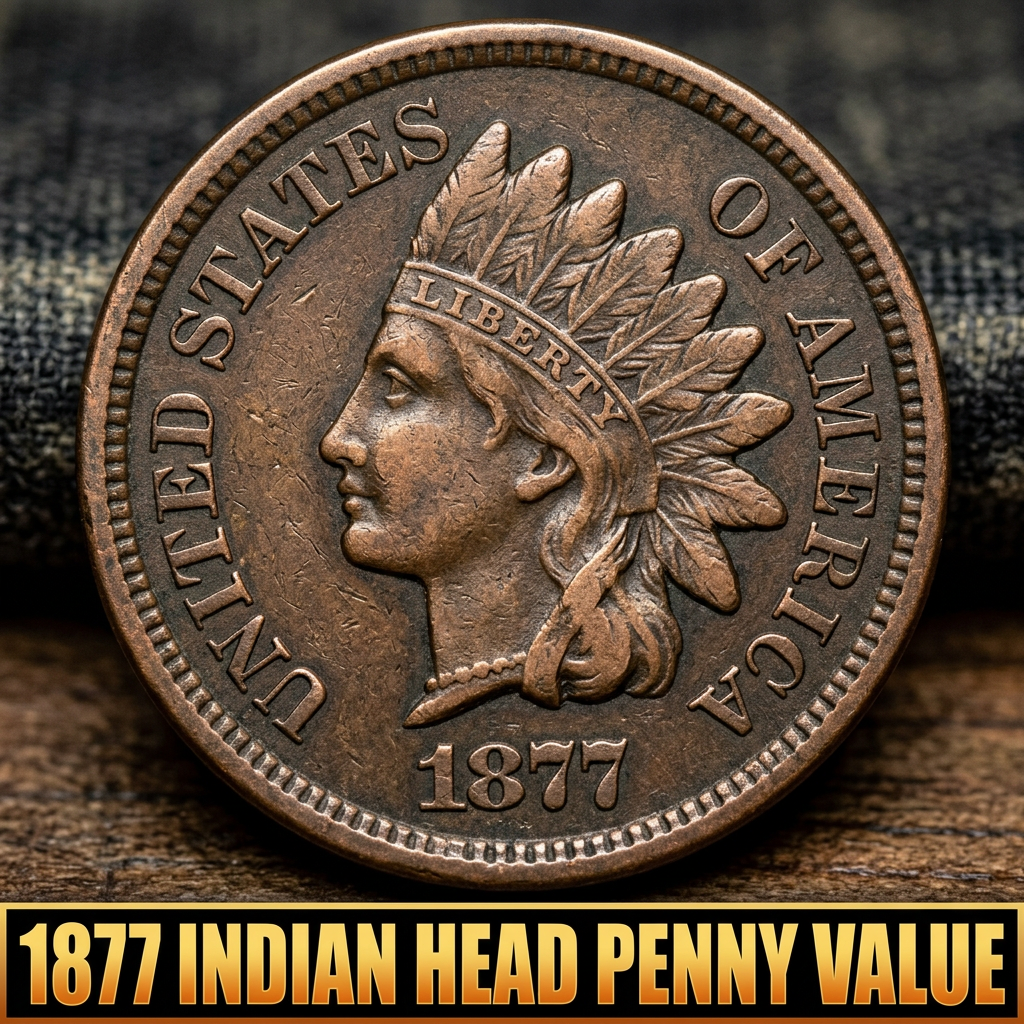
The 1877 Indian Head Penny is worth anywhere from $600 in heavily worn condition to over $30,000 for specimens in pristine mint state. This specific date is widely considered the “Holy Grail” of the entire series, making it a dream find for any casual collector or lucky treasure hunter.
Why the 1877 Indian Head Penny Is So Rare and Valuable
If you have discovered an 1877 cent in an old jar or a family collection, you are holding one of the most significant pieces of American numismatic history. Unlike other years where millions of coins were produced, the 1877 mintage was incredibly low due to a nationwide economic depression. The Philadelphia Mint struck only 852,500 of these pennies, and because people were struggling financially, few thought to save new coins for posterity.
To determine if your find is genuine, you can use the best coin identifier app to get an initial assessment. Most 1877 pennies seen today are heavily circulated, as they spent decades passing from hand to hand. Finding one with original copper luster or crisp details on the feathers and headband is exceptionally rare.
Because of its high value, the 1877 penny is frequently counterfeited or altered from 1871 or 1874 dates. Before you get too excited, it is wise to consult a professional or use a reliable mobile tool like CoinHix to compare your coin’s features with high-resolution reference images.
Estimated Market Values Based on Coin Condition
When determining the price of your coin, collectors look at “grading,” which measures how much wear the surface has sustained. A coin in “Good” condition will show a flat relief with blurred details, while an “Uncirculated” coin looks like it just came off the press. The most coveted versions are those that retain their original red copper color.
You can check current market trends for 1877 Indian Head Penny pristine red values to see how much collectors are willing to pay for top-tier specimens. Even in the lowest grades, this coin commands hundreds of dollars, which is unusual for a small cent.
| Condition / Grade | Estimated Market Value |
|---|---|
| Good (G-4) | $600 – $850 |
| Fine (F-12) | $1,200 – $1,600 |
| Extremely Fine (XF-40) | $2,500 – $3,200 |
| About Uncirculated (AU-50) | $4,000 – $5,500 |
| Mint State (MS-63) | $8,500 – $15,000+ |
Key Details to Verify Your 1877 Penny Worth
Because the 1877 date is so lucrative, knowing what to look for is essential. Genuine 1877 pennies have specific characteristics. For example, on authentic coins, the “77” in the date is usually slightly weak compared to other years, and the “N” in the word “ONE” on the reverse side should be perfectly struck.
Many people use the CoinHix app to zoom in on these tiny details that are invisible to the naked eye. If you see signs that the last “7” has been moved or soldered on, the coin is likely a fake. Understanding the 1877 penny price guide and authentication tips can save you from a costly mistake if you are looking to buy or help you realize the true fortune you have in your pocket.
Always remember: never clean your coins! Even if the penny looks dark or dirty, scrubbing it with chemicals or a cloth will instantly slash its value by 50% or more. Collectors prefer “original skin,” which is the natural patina a coin develops over 140 years.
How to Sell Your Rare Indian Head Cent
Once you’ve used CoinHix to confirm that your coin has the correct features, your next step should be professional grading by a service like PCGS or NGC. Because the 1877 penny is so valuable, most reputable dealers and auction houses will only handle specimens that have been “slabbed,” or encased in protective plastic with a verified grade.
Selling a coin of this magnitude is best done through a specialized numismatic auction rather than a local pawn shop. Auction houses have access to serious collectors who are willing to pay record-shattering prices for rare dates. Keep an eye on recent sales and realized prices to ensure you are getting a fair offer for your treasure.
Q: How can I tell if my 1877 penny is a fake?
A: Real 1877 pennies often have a “weak strike” on the date and the word “LIBERTY” on the headband. If the date looks exceptionally bold or the digits look uneven, it might be an alteration from a different year. Using a high-powered loupe or a coin identification app is highly recommended.
Q: Why is 1877 the most expensive year for Indian Head Pennies?
A: It is a “Key Date” because of the incredibly low mintage of 852,500. During the 1870s, the U.S. was in a recession, and the demand for new pennies was very low, leading to fewer coins being made and even fewer being saved in good condition.
Q: Should I clean my 1877 penny to make it look better?
A: Absolutely not. Cleaning a rare coin like the 1877 Indian Head Penny will permanently damage its surface and significantly reduce its market value. Leave the coin in its natural state to preserve its historical and financial worth.